
In the blind
Many of the Greater Sandhill Cranes in Wisconsin gather each autumn on the sandbars of the Wisconsin River. Happily, one of their favorite spots can be easily viewed near the Aldo Leopold Shack in Baraboo. Not so happily, rain was predicted for the day I was to go see them. Skies were gray and the wind was chilly as I drove to the Leopold Center. But as a group of us hiked through the crunchy leaves to the blind along the river, patches of blue sky appeared. It didn’t rain.
Instead, we got a rainbow. Protected from the wind by the fabric of the blind, I wasn’t cold or the least uncomfortable, though we stood there for two hours. With the streaks of the partial rainbow over the east bank of the river and the first hints of sunset behind us, it was a good place to be on an October day, whether we saw birds or not.

Wisconsin River
And we did see birds. Geese flew in formations overhead. A Bald Eagle flew by. Sandhill Cranes came by twos and threes to gather on the sandbanks of the river. I didn’t have a lens powerful enough to get a good picture, but I did have binoculars and I could sure hear their calls. There was much hoopla as they arrived, bugling back and forth as they settled themselves among the dozen cranes already there. Our guide, Stanley Temple, professor emeritus of University of Wisconsin and a scholar of bird conservation, called it “social chatter.” The birds were talking with each other.
According to the fossil record, cranes are of ancient design. In “Marshland Elegy” Leopold observed that “our appreciation of the crane grows with the slow unraveling of earthly history. His tribe, we now know, stems out of the remote Eocene. The other members of the fauna in which he originated are long since entombed within the hills. When we hear his call we hear no mere bird. We hear the trumpet in the orchestra of evolution. He is the symbol of our untamable past, of that incredible sweep of millennia which underlies and conditions the daily affairs of birds and men.”
Each morning at the Shack, Leopold liked to keep notes on which bird species he heard and when he heard them. From these notes, Dr. Temple recreated the likely soundscape of 1940s Wisconsin at this site. In the bird blind, I heard some of them for myself, grateful to witness some of the enduring rituals of the season.
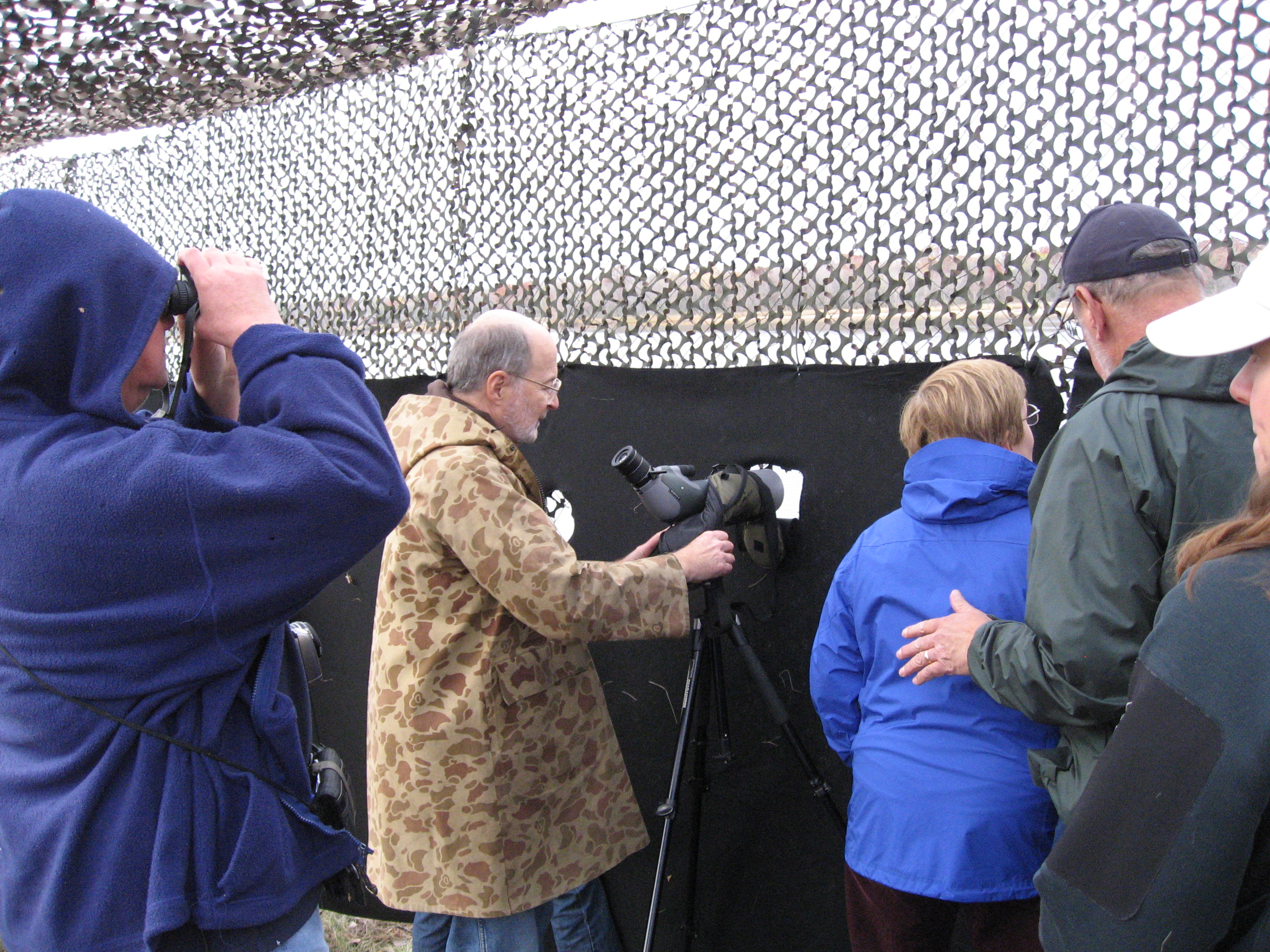
Stanley Temple at the blind with a group from the Leopold Center

 OF THE EARTH by Barbara Terao