
A Square Inch of Quiet

New kinds of listening

I am learning lately to listen more carefully and preserve  peace and quiet when I can.  I recommend Listening Below the Noise by Anne LeClaire and One Square Inch of Silence by Gordon Hempton and John Grossman because those authors have helped me listen deeper, more frequently, and with fresh ears.


For Gordon Hempton, listening is his practice and silence his therapy.  Unlike a monk in silent retreat, Hempton goes forth to take full measure of his adversary—noise pollution.  And he does it while crossing the country, from Washington state to Washington, D.C.,  in a 1964 Volkswagen van he calls “Vee Dub,” a car that is a character in its own right.

Hempton’s other constant companion is his sound-level meter with which he takes a noise profile of the United States from one end to the other, with many side trips to places recommended to him as quiet.  The results are not good.  Rarely can Hempton find the peace of nature (with its diversity of sounds) for more than a few minutes without the intrusion of man-made noise.  Those pervasive noises from airplanes, cars, and oil rigs can grate on us in ways we don’t even realize, adding an undertone of stress to an already stressed-out country.  As Henry David Thoreau, the author of Walden, noticed, “Men have become the tools of their tools.”  The racket those tools are making is drowning out our opportunities to pause, appreciate, regroup, and reflect.

Gordon Hempton is an Emmy award-winning acoustic ecologist who records sounds for everything from movies to video games.  His book is called One Square Inch of Silence: One Man’s Search for Natural Silence in a Noisy World (2009).  He even includes a CD of nature sounds with his book, which, sadly, was missing in my library copy.  His listeners have let him know that they find joy, solace, and healing in the music of birds, water, and trees that he records—soundscapes where humans felt at home for thousands of years.  Soundscapes now almost impossible to find.

Part memoir and part manifesto, the writing in this book can be a bit rambling at times, just like his trip.  Yet there is something compelling about the story and his efforts to inform—and ultimately confront—federal officials who, on paper anyway, are mandated to protect citizens from unmitigated noise.  His main pleas are to the park service and the Federal Aviation Authority.  If we could restrict airplane travel over the national parks, that would help preserve the very peace and quiet that visitors seek there.  Hempton is not hopeful about winning that battle because it is too late.  Both commercial flights and sightseeing flights go over the Grand Canyon, for instance.

But Hempton has staked a small claim to silence and that is the one square inch of the book title, a red stone he placed on a log in the Olympic National Park in Washington state.  That area of the northwestern United States has very few planes flying over it and he would like to keep it that way.  He invites anyone at the Park to hike to the stone and leave him a message in a jar he put there.  He likes to know that he has allies in his often lonely fight to be conscious about protecting natural silence, the silence that we don’t  even know we’re missing till we get under the rumbling threshold of noise that has become the norm.

The book by Anne LeClaire is Listening Below the Noise: A Meditation on the Practice of Silence (2009).  For almost two decades now, LeClaire has taken two days of silence a month.  Doing so, she has found a source of renewal and peace that helps her remain true to herself in the midst of a busy life.  I was fortunate to spend a weekend with her and take time to listen to myself and nature more attentively than ever before.  Both Hempton and LeClaire remind us to pay attention, both within and without, and treasure the silence.

Anne LeClaire’s website is http://www.anneleclaire.com.  Look for her Sacred Silence workshops.  Also see http://www.onesquareinch.org and, if you can, take a walk in the Hoh Rainforest, find Hempton’s stone, and sit a spell.

Land Ethic

How did a hard-boiled forester, hunter, professor, and fisherman become one of our most eloquent spokesmen for loving and caring for the land? Aldo Leopold (1887-1948) was a pioneer conservationist who is well known for his book of essays, A Sand County Almanac.  He credits a wolf in Arizona and a shack in Wisconsin for his personal transformation and the evolution of his ideas.

As a young forester in Arizona, Leopold killed a wolf.  In a section of his book called “Thinking Like a Mountain,” he remembered, “We reached the old wolf in time to watch a fierce green fire dying in her eyes.  I realized then, and have known ever since, that there was something new to me in those eyes–something known only to her and to the mountain.  I was young then, and full of trigger-itch; I thought that because fewer wolves meant more deer, that no wolves would mean hunters’ paradise.  But after seeing the green fire die, I sensed that neither the wolf nor the mountain agreed with such a view.”  Part of his transformation in the Southwest was that he ceased to merely act on his environment and began to act with it, listening to wolf and mountain, tree and stream.

“We abuse land because we regard it as a commodity belonging to us.  When we see land as a community to which we belong, we may begin to use it with love and respect.”  To enter the community Leopold made his own, at least on weekends when he could get away from his work at the University of Wisconsin, I drove to the Aldo Leopold Center near Baraboo, Wisconsin (www.aldoleopold.org).  At the Center, a gorgeous pine and stone building with two kinds of geothermal systems, I talked with an intern named Anna and she gave me directions to the secluded Shack and loaned me a bicycle to get there.  Following a paved road and then a grassy path, I arrived at the place that inspired so many of the essays in A Sand County Almanac.

When Aldo, his wife Estella, and their five children bought their property in 1935, it was a sandy, over-farmed field near the Wisconsin River, with only an old chicken coop left on it.  The family shoveled out the dirt and manure and made that coop livable for their many visits from Madison.  (One son built an outhouse they called the Parthenon.)  For Aldo, it was an experiment in renewing the land.  He and his family planted thousands of trees and wildflowers, making it a lush, green place.  A place to listen to the land.

“A land ethic,” Leopold wrote, “reflects a conviction of individual responsibility for the health of the land.  Health is the capacity of the land for self-renewal.  Conservation is our effort to understand and preserve this capacity.”  He did that with his own hands, and died trying to extinguish a brush fire on his neighbor’s land.  His daughter, Nina, still lives near the Shack and has kept the green fire burning.

In 2012, look for the documentary on PBS, “Green Fire: Aldo Leopold and the Land Ethic in the 21st Century.”

I biked to the shack where Leopold wrote Sand County Almanac

Turtle Breath

Chelydra Serpentina

How can aquatic turtles stay under water so long?  I’m watching one in Crystal Lake and she (?) is staying on the bottom of the lake for a long time.  I’ve been watching her for a while and I’ve decided to call her Jacqueline.

I was going to go kayaking but then I saw the turtle next to the dock and didn’t want to disturb her.  I sat down on the dock and began watching.  I’m starting to think this is pretty boring.  How can I just sit here staring at a ten-inch circle snuggled into a patch of seaweed?  In truth, the lake environment is neither bored nor boring.  It is my problem that I’m losing interest.  I remember a comment I made at a study group a few days ago: Ask questions of the material and your curiosity will guide you.  The question that comes to my mind now is about turtle respiration.  How do they do it?  The question gives me a time frame: Watch Jacqueline until she comes up for air.

She is a snapping turtle with a blunt, diamond-shaped head and a shell covered with algae. The algae looks like a fur coat and I want to pet it.  (Snappers came by their name for a reason, so this would not be wise.)  A sapphire dragonfly zips by and reminds me to pay attention.  I look up and see a bald eagle flying toward me across the lake, making high piercing calls before landing in a pine tree.

The book I’m reading lately, One Square Inch of Silence by Gordon Hempton, comes to mind and prompts me to listen more carefully.  Hempton is trying to help preserve natural quiet in a square inch (and beyond) of the Olympic National Park in Washington state, and elsewhere.  He is a professional listener and recorder of sound who is troubled by the increasing pervasiveness of man-made noises.   I let my ears lead me and notice that I can hear vehicle traffic from time to time.  Someone across the lake is cutting wood and then hammering it.  A flag flaps in the breeze and children splash into the water.  The cars from the county road could be considered noise pollution, but the rest doesn’t bother me.

Still, the turtle hasn’t come to the surface.  I think of my yoga teacher, Laura, saying “If you haven’t breathed lately, now would be a good time to do so.”  Does it make me anxious to see an oxygen-dependent being  under water for more than twenty minutes?  Oddly, it gives me a sense of peace, of being still and grounded.  I take a breath.  After another ten minutes or so, I see the tiny tip of Jacqueline’s nose break the surface and bubble a bit, breathing with the least effort imaginable before she snuggles back into her seaweed bed.  It’s time to go kayaking.

Later, checking the Encyclopedia of Earth online, I find out that snappers and some other types of turtles use the soft tissue in their mouths like gills, extracting oxygen from the water.  That’s how they obtain enough air to stay alive while hibernating for months at the bottom of lakes.  It is not enough air for active daily life, but it is something.  My questioning mind is somewhat satisfied, though I am still amazed at Jacqueline’s ability to stay submerged for so long.  I’m just glad that my turtle neighbor, with her ten round inches, gave me an excuse to be quiet, watch, and listen for the duration of a breath.

For the Love of Wolves

We came from Illinois, Wisconsin, and Missouri, and as far away as Arizona, all for the love of wolves.  Our group of eight women and two men wanted to see wolves, to howl with them, to get to know all about them and, maybe, help find ways to protect them.  That’s why we flew and drove hundreds of miles to the far-north outpost of Ely, Minnesota June 11-13, 2010.  It was a “learning vacation” at the International Wolf Center with a side trip to the Vince Shute Bear Sanctuary.

When Jess, our IWC representative, asked why we were there, many of us admitted–outright–our love of canis lupus.  The couple from Arizona started to explain what it meant to them to be there and the husband stopped speaking mid-sentence as tears sprang to his eyes.  Oh, yes, we were smitten before even seeing the objects of our affection.

We also had a general love of nature (biophilia, as E.O. Wilson calls it) that drew us to one of the most wild and refreshing places in the United States, the Boundary Waters Canoe Area.  As Kim, a retired teacher said, “I just love the Earth.”  During our weekend we saw eagles, deer, loons, woodpeckers, and fourteen wild black bear cubs and their mothers wandering through the bear sanctuary.  The forests and lakes provided the sweetest air you can find anywhere.

Staying at Wintergreen Dogsledding Lodge, we also saw sled dogs having the summer off.  Paul Schurke, arctic adventurer and keeper of the Lodge, made sure that we got to visit with the new pups, only two weeks old.  Whenever I stopped by the kennels, the dogs sent up a howl in reply to my greetings.

As for howling with wild wolves, we tried.  Jess took us to a remote location and led us off with her impressively tonal howl.  We joined in with our best vocalizations but got no response.  We did manage to locate a female wolf the next day, however, by radio telemetry.  We didn’t see her but we knew where she was on the map and we knew by the frequency of her radio collar that she was a member of the Madden Lake Pack.

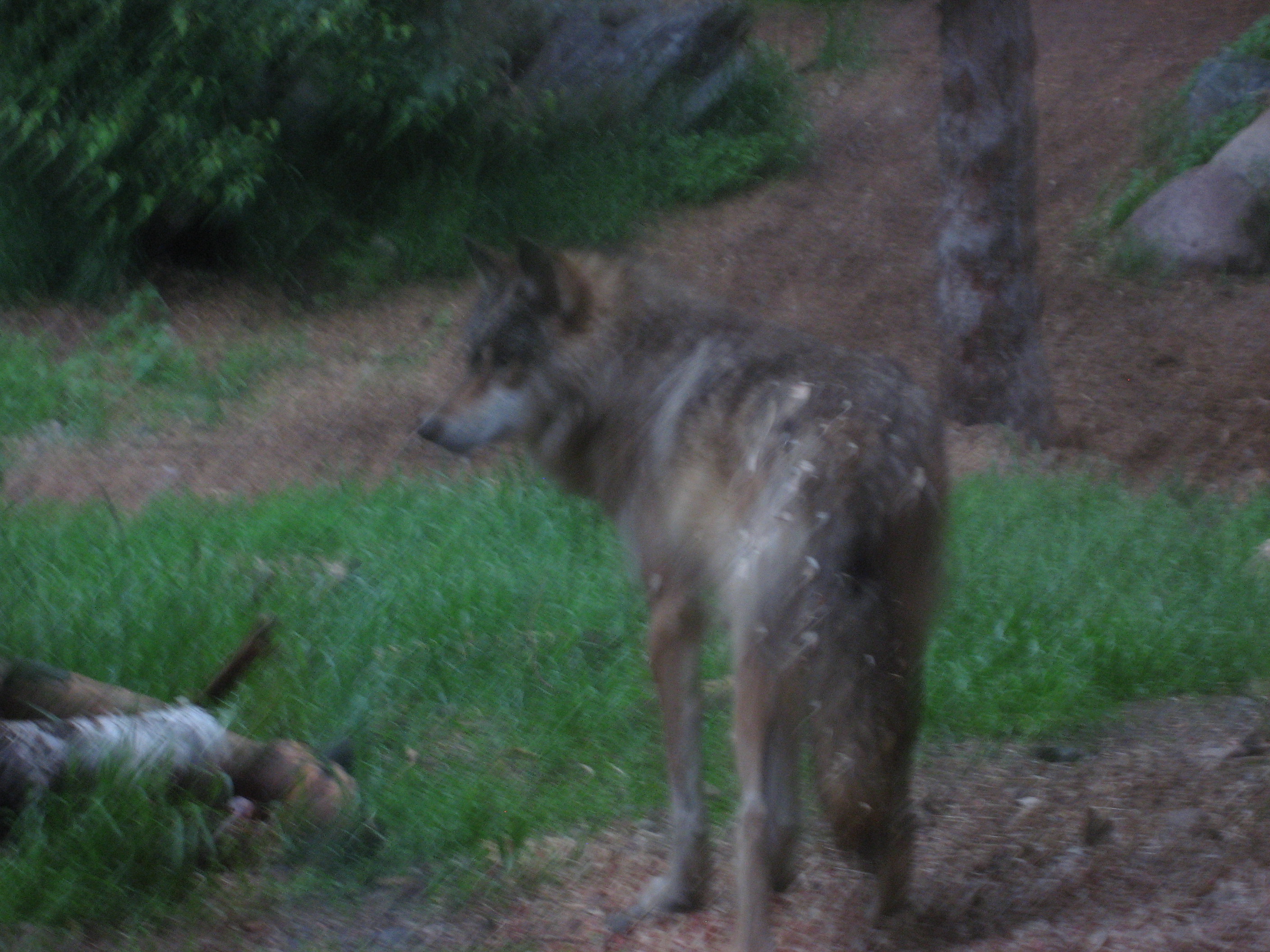
The five wolves that indulged us with their presence were the ambassador wolves kept at the International Wolf Center.  Though they have more than an acre to roam, they stayed near the viewing windows for much of the time.  One named Grizzer approached the window only a few inches from the woman from Arizona.  They had a wonderful moment of connection.  I chose to observe Aidan, a two-year-old male, and did some deep listening exercises on my side of the glass to see if we could communicate.  I felt connected to him in a meditative way and thanked him for his presence and all we can learn from him and his species.  When we visited the pack after hours, we heard them howling full tilt, triggered by some unseen presence or distant noise.  That was an experience to remember, even if the wolves we heard were in captivity.

There is a book by Julia Cameron called The Artist’s Way in which Cameron suggests having an “artist’s date” on a regular basis to activate your creativity.  This is a date with yourself to go somewhere inspiring, such as a museum or simply a colorful fabric store, as a way to keep your artistic self alive.  Being in northern Minnesota was like having a “planet date,” a reminder of why I love the Earth so much and want to tend to nature, in both the sense of caretaking and as in “attend,” paying attention to the wildness around me.

Sometimes a long-married couple needs a romantic outing to renew their relationship.  “Oh, yes, that’s why I’m crazy about you.”  I recommend a wilderness date with something in nature that interests you.  Maybe it will be wolves, even Aidan, my special fellow, or simply a flower in your yard.  It is too easy to get distracted and forget the bounty of woods, beach, field, mountain, and sky.  But, I guarantee, once you are out there, you’ll fall in love all over again.

I’m pretty sure that all of us at the Wolf Center did.

Death at Glen Grove

She disappeared off the face of the earth in February 1977.
Her body was never found, nor was a murder weapon, much less her killer.   But the spirit of Helen Brach lives on at Glen Grove Stables near Chicago.

My fellow nonfiction writers may know what I mean when I admit to wishing for interesting things to write about.  All I can say is be careful what you wish for.

I came across a cloth-covered journal I kept in 2003.  My bright idea at that time was to take the journal with me to my 14-year-old’s riding lesson at Glen Grove Equestrian Center next to the forest preserve in Morton Grove.  The stables had a waiting area with an old fireplace, two beat-up picnic tables, and a window into the arena where Emily had her lesson with her trainer, Paula.  My plan was to sit on the wooden bench of the picnic table and write while also watching Emily jump with her horse.  I was always looking for more time to write.

Seemed like a plan.  My only worry was what to write about.  Would I observe the secret life of the equestrian set?  The personal connections riders made with the horses?

Time to ride (and write)

One thing I knew about Glen Grove is that it had a colorful past, associated with several tragedies.    The stables were once owned and run by Richard Bailey, a con man who swindled wealthy widows by selling them defective horses for huge amounts of money.  One of those widows was the Brach candy heiress, Helen Brach.  She was too sharp for him and just as she was figuring out his dastardly game, she disappeared.  Her body was never found.

The girls who rode horses at Glen Grove liked to stay late some nights and have a little séance with the spirit of Helen Brach, just to spook the heck out of themselves.  Several nine-year-old girls told me, with solemn conviction,  “Helen Brach is buried in the fireplace.”

So there was that mystery (since solved, if you believe the confession of a man who said that Brach’s body was smelted into oblivion at a steel mill).  There was also a sad story of three boys murdered at the stables back in the 1940s.  Horses as well were killed as one way for Bailey to collect insurance money on his overpriced steeds.  The thug he hired used electrocution.  Bailey was eventually tried for conspiracy to murder and sent to prison for life.  The actual killer has never been named.

But now Glen Grove is a peaceful, pastoral equestrian center run by the park district.  I wondered what I would write about as I sat there for two hours.  At least, I figured, I would save on gas by not driving there twice, and I could watch Emily’s progress.  So Emily and I set out on July 24, she with her riding gear and me with my cloth-covered journal.

We drove west past Old Orchard Mall and turned on Harms Road, but there we stopped.  We couldn’t get in the Glen Grove gate because the police were there stooped over a man on the ground.  A man with blood on him.  The police put the poor fellow in a body bag and waved us through.  Emily and I looked at each other as I parked the car.  What is going on here?

It turned out that Paula, Emily’s trainer, spotted the corpse at the edge of the forest preserve, next to the entrance of Glen Grove, and called the police.  (Strangely, when WGN News showed up, Paula disappeared.  I guess she didn’t want to be on TV.)  The man died from a gunshot wound, apparently self-inflicted.  It was a sad story.

I did write at Glen Grove Stables for a few months, but I never again worried about–or wished for–something interesting to write about.

Turtle House

It is such a lovely day that I am taking the kayak out for the first time this year.  Some of the birds also seem to be enjoying our warm April day, calling to each other and finishing their nests.  (I have seen an Eastern Phoebe lately, sculpting a deep pocket of moss and grass by our  cabin door.)  Distant woodpeckers hammer on trees.

As I paddle along the shore, I scare up a Canada Goose and it flies away.  Bass slide by my boat and minnows frisk in the shallows.  The lake is thawed and everybody in this house of water is waking up.

So where are the turtles?  I reach the opposite (east) side of the lake and drift quietly, looking.  No turtles.  I paddle north to the boggy end of Crystal Lake and–voila!  There are two big turtles basking on the dome of a muskrat den, and they slide into the water  as I appoach.  Then I see several tea-saucer-size snapping turtles perched on roots and they bellyflop into the lake at the sight of me.  They are almost cute at that size, even with their ridged, armor-like backs.  Soon there are five heads sticking up from the water, watching me glide by.

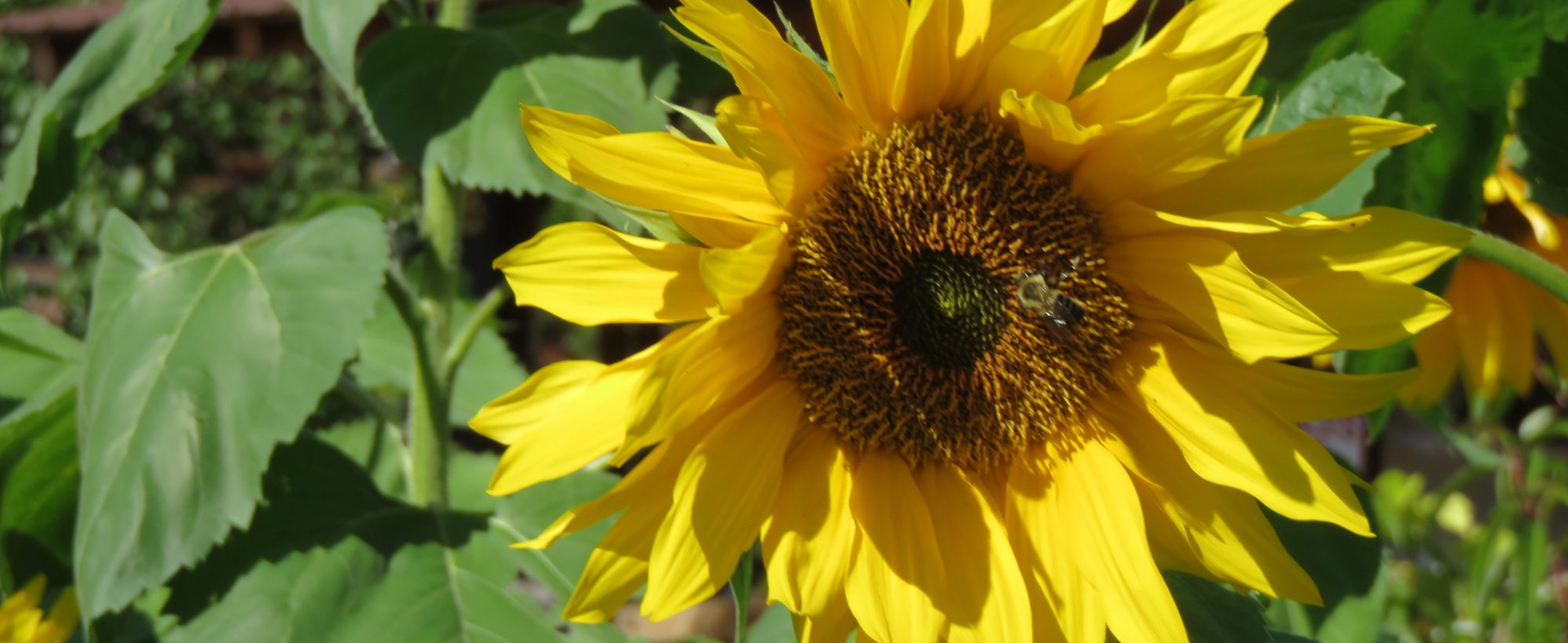
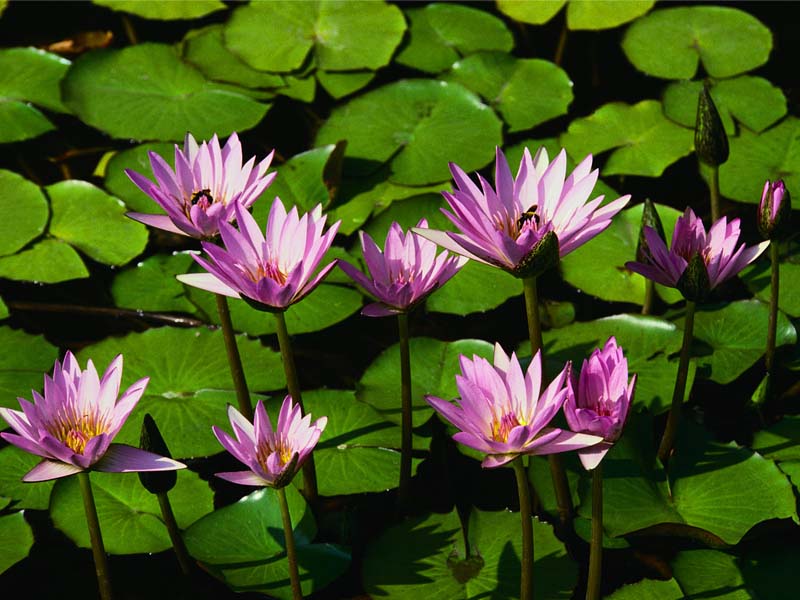
In the basement of the lake, lily pads reach for the surface, most of them still curled up like oversized cowry shells.  The ones that are unfurling underwater are as orange and red as maple leaves in autumn.  I never knew they started out that way, so colorful.  On the shore, two mud turtles keep each other company, the domes of their shells glowing happily in the afternoon sun.  I begin to understand why the turtles like this end of the lake; there are few trees to block the light.  Bees land on my lazy, yellow kayak, so I pick up speed and head for home.  The bees return to land, where yellow means pollen.

At our dock I still don’t see any turtles, but now I know that the whole lake is their house.  Our bit of shore may be a bedroom for a particularly big snapper (see previous posting, “Turtle Trails”), but the north end of the lake is their sun room.  Soon it will be adorned with vibrant water lilies and green landing pads for frogs.

TAKING THE WATERS

Congress Spring

 Spring at Congress Park

In Saratoga Springs, New York, at the foot of the Adirondack Mountains, water rules.  Or it did in the beginning.  It was a place of medicine waters to the Mohawks and other Iroquois nations of Kayaderossera, “the land of crooked waters.”  Native Americans bathed in and drank the spring water there for a variety of ailments.

William Johnson, Superintendent of Indian Affairs, traded fairly with the Indians and won their respect and even friendship.  So it was only natural that when Johnson fell desperately ill in 1771, his Mohawk friends took him to High Rock Spring for healing.  Johnson was so weak that he had to be carried on a litter for miles to reach the sacred springs, making him the first white person to visit what is now known as Saratoga Springs.

After four days of sipping the mineral-infused water, the superintendent felt worlds better.  As he reported to his friend, Philip Schuyler, “I have just returned from a visit to a most amazing spring, which almost effected my cure, and I have sent for Dr. Stringer, of New York, to come up and analyze it.”   The secret having been leaked, a trickle of visitors led to a torrent.  Bottlers got busy selling the stuff while resorts sprang up for those wishing to “take the waters,” as it was said.

When I visited High Rock, where the spring used to be, there was nothing left but the stone mound formed by the minerals gushing up all those years ago.  What had been preserved by the First Nations people for at least 300 years was exploited to death in less than a century.  But no worries.  I see that Disney World in Florida built a Saratoga Springs Resort with a High Rock Spring Pool next to their arcade of video games.  “Experience the magic that flows through the community–from the Victorian architecture to the gurgling springs” for $400 a night.  Somehow it’s not the same.

A MicMac elder from Canada, Albert Ward, told me in 2004 that we are getting so out of balance that he believes the planet will tilt, probably by the year 2017.   When we take the waters of Mother Earth, we drain the underground reserves, contributing to these imbalances, he said.  Where water and healing once ruled, other forces have taken over.  The race track in Saratoga is now the biggest attraction.  Place your bets.

I walked to Congress Park in downtown Saratoga Springs, passing a sculpture by Daniel Chester called Spirit of Life, a winged woman twice my size.  In one hand she holds a pine branch and in the other a bowl of abundance, hinting to me of both balance and hope.  Continuing my search for the springs, I stopped at a white-domed pavilion.  Under the dome was Columbian Spring, which Gideon Putnam, the primary founder of the city, ran dry in short order.  I cupped my hand under the faucet there and drank from the chlorinated city reserves, running not from the natural springs but piped in from a more distant Loughberry Lake.   Sometimes, as the song goes, we don’t know what we’ve got till it’s gone.

Muir Musings in Marquette County

At John Muir Park 2009

Barb at Ennis Lake, John Muir Park

Sun is breaking through the morning mist as I arrive at John Muir Park on October 27.  I walk down the hill to what the Muirs called Fountain Lake, now known as Ennis Lake, and see streams of holy light raking the fog-shrouded waters.

Though no structure remains, I know the Muirs’ farmhouse, built in 1850, was somewhere nearby.  I picture young John getting up on a day like today with the inside of the house about the same temperature as the outside: 34 degrees.  The one stove in the house was only for cooking, according to John’s father, Daniel.

The Scottish family made a farm here in central Wisconsin, their first home in America, when John was 11.  He and his brother attended school in Scotland, but in Wisconsin they were too busy doing farm chores and building a house.  Later, when the land wore out, the family moved to nearby Hickory Hills and John dug a well by hand through 90 feet of soil and stone.  He was almost worked to death, but the land and trees always revived him, as he wrote, remembering, “Young hearts, young leaves, flowers, animals, the winds and the streams and the sparkly lake, all wildly, gladly rejoicing together!”

As the mists lift, so do flocks of small birds, moving from shore grass to lofty treetops all gold and red with autumn leaves.  A marsh hawk flies by and I hear Sand Hill Cranes calling from the Fox River across Highway F.  I’ve come to commune with nature–and the spirit of John Muir.  As offerings, I have two of his favorite foods: bread and apple slices.

Moving away from the lake, I follow a mowed path.  A section of the Ice Age Trail goes around Ennis Lake, kept up by volunteers in order to highlight the history of the glaciers in Wisconsin.  I go over a hill and down to two spreading oak trees, still hanging onto their leaves.  As the sun brightens the sky, the tan leaves glow as if fresh-baked and buttered.  The trees are so big, surely they were around when young Johnnie Muir was here.  I offer chunks of spelt bread and Fuji apple.  I throw in an almond for good measure.

Driving home, north along Tenth Road, I finally see some Sand Hill Cranes.  There are dozens of them milling about in an open field bordered by corn.  Usually the cranes pair off in separate fields, but at this time of year they gather to prepare for their migrations to Texas or points further south.  They call to each other, a deep chortle like rusty hinges on a creaky door.

With almost no traffic I am free to linger along the side of the road, watching.  Three cranes glide by my car window, sailing along just to stretch their wings.  In the field, two elegant, gray cranes face each other and bow.  One flaps its wings, then the other.  Then there is bobbing all around followed by a minute’s rest.  Then more bobbing and flapping.  It is quite a dance.

I drive home to the cabin, munching the remains of the apple I shared with John Muir and the oak trees.  During his lifetime, Muir helped create national parks such as Yosemite, but he was unable to preserve this patch of land that had been so dear to him as a boy.  He tried, but it wasn’t until 1957 that it became John Muir Memorial Park, where anyone can visit and make their own connections with the natural beauty that helped form a passionate conservationist.

Turtle Trails

I went down to the dock to take a swim but got distracted by the wildlife.  There was a green heron on the swim raft.  A green heron!  I’d never seen one up close before.  They are described in The Sibley Guide to Birds as the most “solitary, secretive” heron and yet this one stayed put even as I walked to the end of the dock to get a good look at him.  (I say “him” because he looked like a hunched-over vicar wearing a cape of dark feathers.)  I talked to him as he marched about, lifting his legs higher than necessary, as if he were wading.

“Hello!  Are you the one who’s been pooping on our swim raft?”  He did not deny it, preening his rufous chest feathers with his long, black beak.  “Well,” I told him, “I won’t take it personally.”

As I sat on the dock, I noticed our resident turtle swimming under the wooden slats.  The huge snapper settled his turkey-platter of a shell in the seaweed and became almost invisible.  Then I noticed a smaller turtle swimming nearby.  A relative of the ancient one under the dock?  The dinner-plate size turtle stuck her(?) head out of the water and watched me, so I talked pleasantly to her and wished her a safe winter in the mud at the bottom of the lake.

“Blessings to you, turtle,” I said and was surprised to hear a low growling noise from the turtle as she submerged and swam away.  Brown blobs followed after her, flowing right toward me, and I realized she was moving her bowels as she went.  An editorial comment?  I tried not to take it personally.  And I decided to wait till spring to go swimming in that Wisconsin lake again.

Vehicle of Gratitude

We get a free paper in our rural mailbox in Wisconsin.  I like to read about upcoming Amish auctions and fundraiser bratfests (for enjoying bratwurst sausages, not naughty children).  I also read the classifieds, which is kind of a sociological experience and is sometimes quite poignant.

The September 8 edition tells me that Sherm’s Piggly Wiggly is looking for a part-time meat cutter and that there is a “Milking position in a double 10 parlor.” There are roosters, dogs, and fishing equipment to buy and houses to rent.  “FOR RENT: Renovated church converted to 3 bedroom, 1.5 bath home.  Vaulted ceilings.”   I guess they would be vaulted, ay?

It’s the letters of thanks that make me realize that we all need ways to show our appreciation.  A farmer writes, “I would like to thank our daughter for milking the cows Sunday, August 9 so we could go to the state fair.”  Lorraine writes to thank the fire and police departments “who helped me through a critical time of my life.  I will never forget your thoughtfulness.”  There seem to be messages for the saints in every issue.  August 25 has an anonymous writer declaring “Thank you Jesus, Mary, Joseph, St. Jude, and St. Anthony for prayers answered.”

So they read that paper,too?  Good to know.  And good to know that an attitude of gratitude still lives in the heartland.  It could also be called an ALTitude of gratitude, because it elevates your life condition when you give thanks, don’t you think?  It gets you out of the valley and onto the top of the hill where you get a perspective on where you’ve been–and how many have helped along the way.