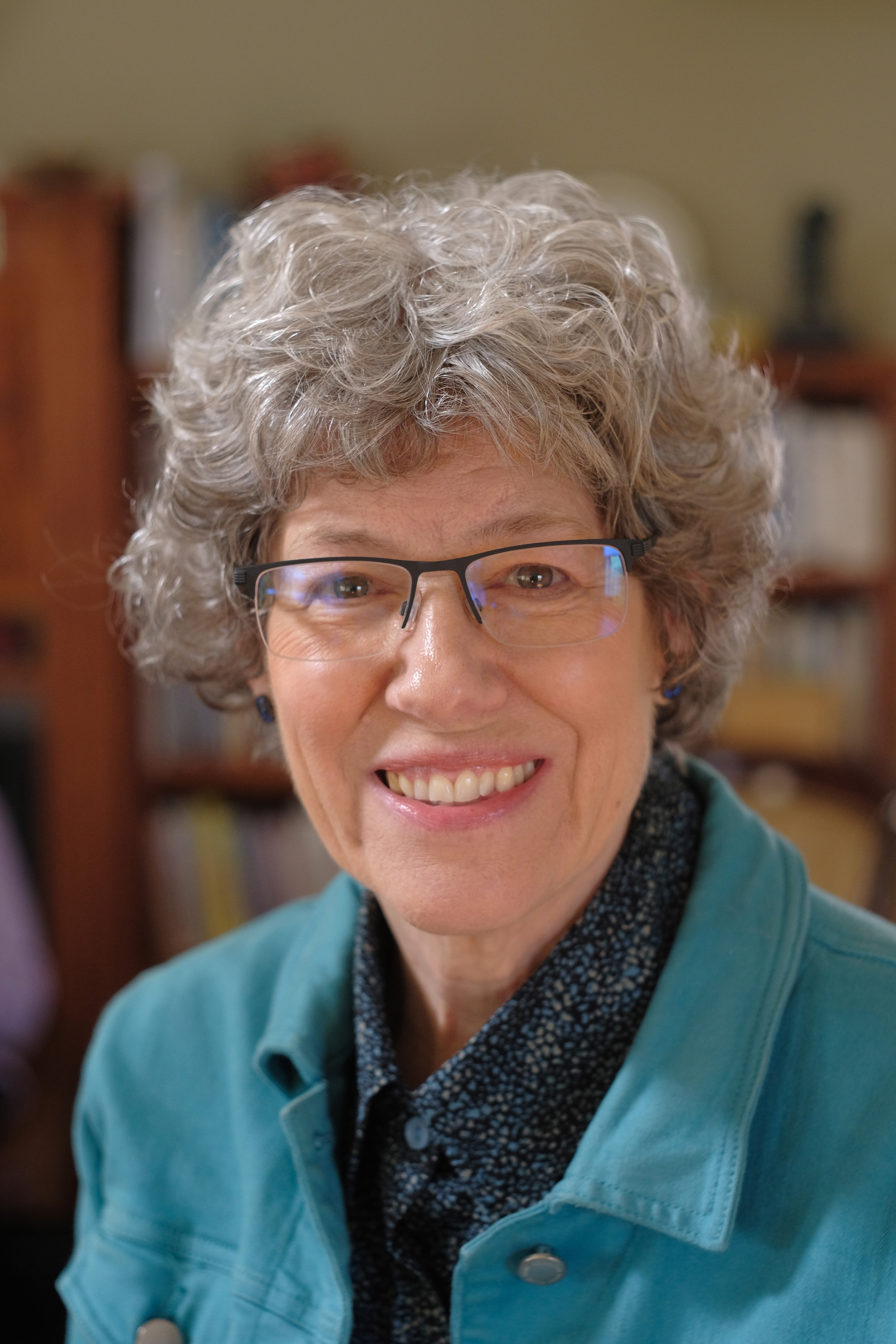
Photo update
Leave a reply

Thank you, readers. I’m keeping my Of the Earth website, but I’m now writing monthly essays on Substack. My stuff is easy to find at barbaraterao.substack.com/p/quote-and-tote. I call it “Quote and Tote: Courage to Carry with You,” offering some pithy quotes, thoughts, and true stories. My topics are varied, leaning toward family, spirituality, nature, and science.

Barbara Wolf Terao and labyrinth
I leave you with useful information from my home state. Minnesota! Come for the culture. Stay because your car won’t start.
Minnesota is the home of the canned meat known as SPAM and the most standard of all meals, the hotdish, which is a baked casserole made with a starch, a meat, and a canned or frozen vegetable, mixed with canned soup.
Be loony. Ululate like a loon! It’s the state bird and one of my favorites on the northern lakes. Or pick up the Midwestern accent, which you may have heard in the “Fargo” movie. Do we have an accent? You betcha!
Another question. Are Minnesotans polite? Yes, but they have their own ways of rebuke. For instance, saying “That’s interesting” (with four syllables not three!) is generally a veiled criticism. At the lake, Ole might say, “Well, Sven, that’s interesting. Most people would tie the anchor to the boat before throwing it overboard.”
Departing from a friend’s house takes a good six or seven steps, at least. 1. Leg slap. 2. “Welp, I suppose.” 3. Move toward the door. 4. Chat. 5. Move to the car, roll window down. 6. Chat. Then be on your way, or maybe stop to make one last comment. Minnesota! Come for the friendliness. Stay for the long goodbye.
This is not goodbye. Come on over to my Quote & Tote Substack, and I’ll hope to hear from you there! Meanwhile, take care. And thanks for your own creativity and being a reader and supporter of me and other writers, artists, and creative folks.
FLEETING FUSION WITH A FURBALL (for National Cat Day, October 29, or any day)
Have you ever been transformed by contact with an animal? Intuitive communicator Marta Williams observed, “Animals have a unique way of affecting our hearts. They sidle in closer than humans do.” That’s been true with our dogs, and there’s also a special awe I feel when I see or interact with wild critters.
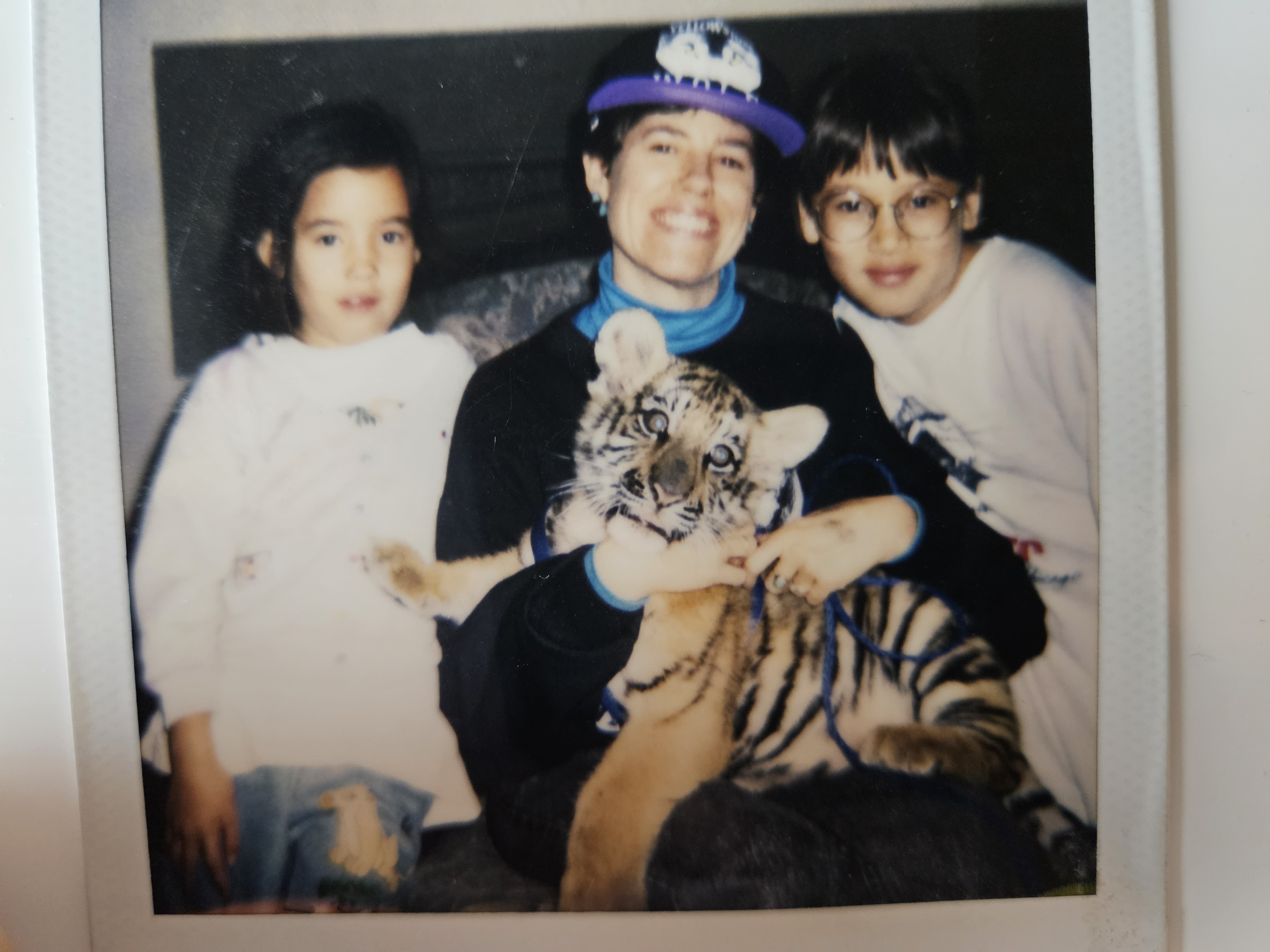
In 1995, when our family lived in Evanston, Illinois, I heard of an event at DePaul University to raise money for the care of abandoned and abused big cats. Partly due to the movie, “The Lion King,” which had just come out the year before, our nine-year-old and six-year-old were immensely interested in big cats, so we went to the fund-raiser. Our younger girl wore her favorite pants, with Simba the lion on the thigh.
We thought we’d see real lions and tigers in cages, but arrived to find them close at hand, walking around a large room with handlers guiding them on leashes. Apparently, the animals had been recently fed because adults were allowed to approach the big predators! Children, understandably, were warned away. (They could be seen as bite-size prey.)
We kept our distance and perused the informative displays along one side of the room, learning about Big Cat Rescue, Turpentine Creek Wildlife Refuge, and the university’s wildlife program. We noticed people lined up on the other side of the room to see a young tiger, so we joined the line. Just as we approached the chair where a woman held a four-month-old tiger named Sherman, he started to squirm and snarl.
“Sorry, I think Sherman needs a break,” the woman said, holding a leash as she set the tiger down. She started to walk away, then paused when the young tiger walked over to me. She looked at me and asked if I’d like to sit down and hold Mr. Grumpy. In less than a heartbeat I was in her chair, arms out. Our daughters sat on each side of me, and I held Sherman, feeling a fleeting fusion with the wild as he settled into my lap. It was a happiness like no other.
“He calmed down,” his handler observed with a smile. My turn was quickly over as others stepped up to hold the curious cub.
Checking my journal for that day, October 29, 1995, I saw a two-sentence entry, as if my words were inadequate for what had happened: I held a four-month-old tiger today. I cannot go back to the way I was.
Barbara Wolf Terao is the author of Reconfigured: A Memoir, published by She Writes Press in July. She and her husband, Donald, live on an island in the Salish Sea near their children, who were not, after all, eaten as tiger snacks. Author website: barbarawolfterao.com (Originally posted on Storied Stuff 10/29/23)
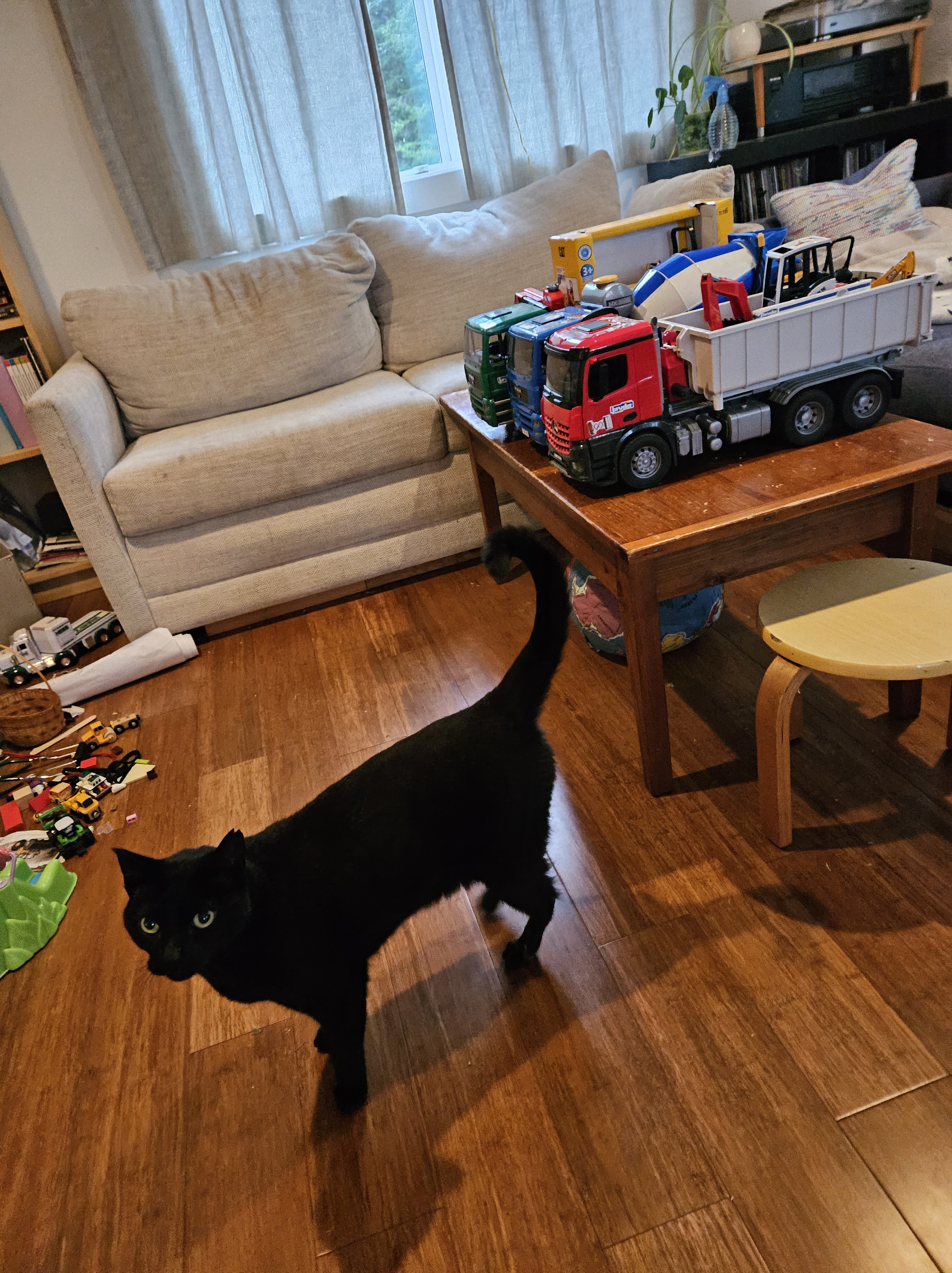
This is Buttons, our daughter and son-in-law’s cat, who has a wild side of his own. (The trucks belong to our grandson.)

Noguchi sculpture and Space Needle, Seattle (photo by Barbara Terao)
“If you don’t like the road you’re walking, start paving another one.” ―Dolly Parton
I’ve been collecting words of wisdom. When an inspiring or poetic observation catches my eye, I add it to my quote file. Some of the quotations became epigraphs to head chapters in my memoir, Reconfigured. Some are saved for future reference — or serve as daily reminders.
As the collection grew, it was hard for me to find a particular quote when I needed it. One day, I decided to organize them by subject. Looking at the results, I noticed the biggest category was “Authentic Self” with 47 memorable quotes, which wasn’t a big surprise. One of the main themes in my writing is the importance of being ourselves — living an authentic life. The closest runner-up was the category of “Spirituality and Kindness,” with 43. “Psychology” and “Trust” had only one quote each, “Cancer-related:” 16.
If I focused on one set of quotes, what patterns or insights would be illuminated? Reflecting on a dozen or so notable statements regarding humanity and self-expression, I was able to explore the concepts as beams of wisdom lighting the way. We can learn to live an authentic life. We have the power to define ourselves. Sometimes, we just need someone to show us how.
Living an Authentic Life: Who Are You?
How do we know who we are? A strange question, perhaps, but one we can answer, at least partially. On the most primal level, we are part of nature, born of parents who are also part of nature, made of “star stuff,” as scientist Carl Sagan liked to say. Paddling a kayak on a lake or walking through a meadow, I know who I am when I feel connected to Mother Earth. Such activity also keeps us in touch with our physical bodies, an essential part of who we are, constantly giving us clues about our feelings if we pay attention. Dancer Twyla Tharp wrote about this in her book, Keep It Moving: “Day by day, move by move, practice who you are and where you are at that very moment. Being connected to your body in its current state will allow you to be more realistic about what you need next, both in your day and in your bounce back.”
There are also spiritual, philosophical, and religious definitions of what makes us who we are. For instance, Desmond Tutu, Archbishop Emeritus of Cape Town, emphasized our interconnected identities and the philosophy of “ubuntu,” saying in an SGI Quarterly magazine interview, “Ubuntu says a person is a person through other persons. I cannot be a human being in isolation. I need other human beings in order for me to become a human being.”
We need to be in community to help us understand who we are and why we’re here.
On the other hand, I need quiet time alone to hear myself think or, in meditation, to not think. Silence can be revelatory. The writer of The Marginalian, Maria Popova, advises us to include moments of peace in each day: “Build pockets of stillness into your life.”
And spiritual teacher Ram Dass invites us to settle deep into that stillness and listen: “The quieter you become, the more you can hear.”
Finding Your Authentic Life: What Are Your Needs?
Perhaps the topic of authenticity is most compelling to those of us whose core identities were splintered or lost as we adapted to others’ needs more than our own. We became distant from ourselves. Some people, I suppose, have always been true to themselves, which may be easier in some cultures, genders, or societies than others. I sometimes think about a rather pessimistic view of Western culture and the stunted roles we play, which comes from psychoanalyst Marion Woodman, who wrote about integration of the self. “Most people have been performing since they were tiny children. They don’t know there’s any other way to live.”
Growing up in the Midwest in the 1950s, this was true for me and most people I knew; our inner selves were hidden, with so much left unsaid. Prompted by an editor to add a takeaway message for my readers at the end of my memoir chapter about finding home, I wrote, “When you are only playing roles and amusing others, that’s a stage, not a home. When you are only serving others, that’s a job, not a home. Where I can hear myself and be heard, that’s home.”
When we are being real with ourselves, we have a better chance of being real with others — and feeling at home in our own bodies and minds.
The challenge for so many of us is to awaken to our inner selves and become more genuine than the roles we play. Brian Doyle has words for this in his novel, Marten Martin. It’s one of my favorite quotes. In a scene with a father and his teenage son, Dave, walking in the woods, Dave tries to speak his truth the best he can. His father responds, “That’s the final frontier for all of us. To take off as many masks as you can pry off and just be you.”
As I finished my memoir about going through cancer and other challenges, I realized authenticity (or U-B-U, as I wrote to myself in shorthand) was the deepest theme and most urgent message for my readers, because I came to understand that self-knowledge and acknowledging feelings contribute to health and well-being. Keep your emotions in motion, not stifled or stuck. Express them, if only to yourself or a trusted friend. It’s not healthy to ignore our pains, aggravations, and sorrows, as the Bard of Avon reminds us in Macbeth: “Give sorrow words; the grief that does not speak knits up the o’er wrought heart and bids it break.”
An Authentic Life: Be Honest With Yourself
Laura Nasi, M.D., is one of many doctors and caregivers who recommends listening to our bodies, intuitions, and emotions. In her book, Cancer as a Wake-up Call, Dr. Nasi reminds us that good health includes physical, mental, emotional, social, and spiritual well-being. In her view, “A disease might be the soul making its voice heard,” so we’d do well to listen.
For self-evaluation, psychology professor Amy Brunell, Ph.D., offers a series of questions about how much we’re letting others know who we truly are. As for me, I’ve had to evolve over the years to even come close to answering her questions with “Yes.” For instance, Brunell asks, “Are you acting according to your values, needs, and preferences or simply to please others, get rewards, or avoid negative consequences? Are you striving for openness and honesty in intimate relationships with the goal of having others know who you truly are?”
How open and honest are we with ourselves and others?
The costs of hiding ourselves are high. Martha Beck points out one of those costs in her book, The Way of Integrity, which particularly struck me: “If you don’t walk your true path, you won’t find your true people.” I would add, if you aren’t being your unique self, how can you fulfill your unique mission or purpose in life?
When we show our shining selves, we illuminate those around us. Author and educator Parker Palmer urges us to be visible: “When we feel certain that the human soul is no longer at work in the world, it’s time to make sure that ours is visible to someone, somewhere.”
Who knows who needs our kindness today? A genuine smile goes a long way.
Being Authentically You, Even With Transformation
Of course, our unique selves are not static. We learn, evolve, and change. As Walt Whitman wrote in his poem, Song of Myself, “Do I contradict myself? / Very well then, I contradict myself, / (I am large, I contain multitudes).”
As we go through illnesses, traumas, and other major events, we are transformed. After grueling cancer treatments, author Suleika Jaouad wrote about reassessing her life: “Though the word may suggest otherwise, recovery is not about salvaging the old at all. It’s about accepting that you must forsake a familiar self forever, in favor of one that is being newly born.”
Why be someone you’re not? You be you — and you’ll be invigorated.
In her book, Gift from the Sea, Anne Morrow Lindbergh warned us how tiring and tiresome pretensions can be: “The most exhausting thing in life, I have discovered, is being insincere.”
We have the power to define ourselves and tell our own stories. I’ll leave the last words of wisdom to singer and writer Tina Turner, who advises us to evict the negative voices in our heads and free our creativity and self-determination:
“…It’s time to tell those voices you’ve heard their propaganda, and you’re not going to take it anymore. Dismiss them, and you will be the only one holding the pen as you write the story of your life.”
Show your soul and it will light the way. Ultimately, you embrace your own life, befriend your own self, and tell your own story.
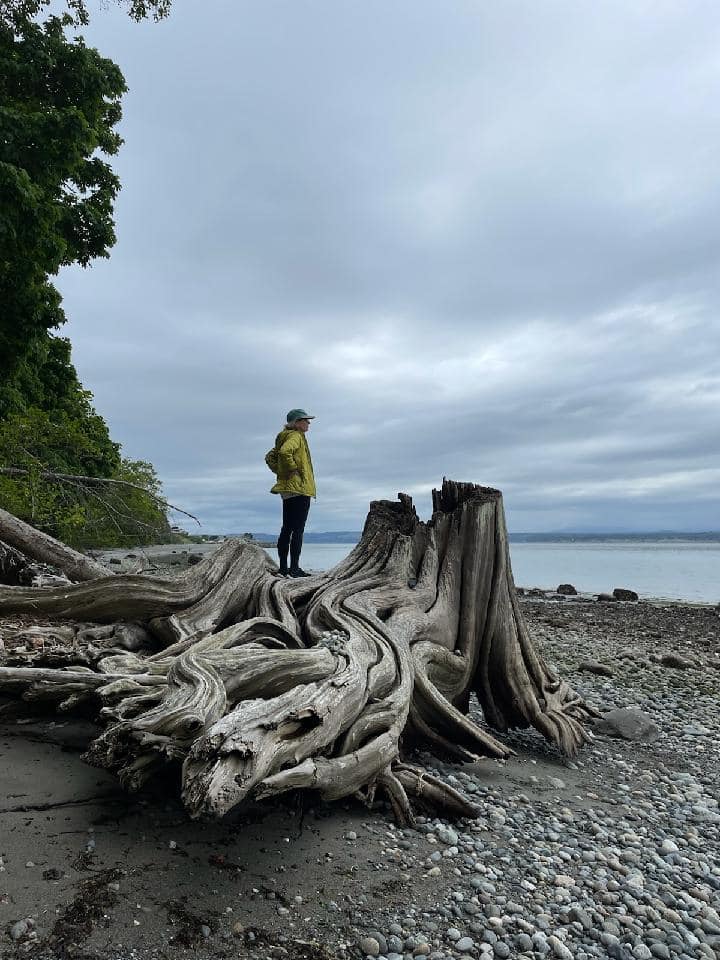

Barbara Wolf Terao
A guest post for Women Writers Women’s Books on the process of writing my memoir. So many of us think we are too ordinary or too weird to write about ourselves, yet once we start writing and sharing, we may be surprised by how many people appreciate our stories!
Urgency of the Story
Before there were podcasts, there were call-in radio shows, and listeners would often identify themselves as “long-time listener, first-time caller.” Similarly, I’m a long-time writer, first-time author, and it really has been a long time!
I began a youthful writing practice when my parents gave me a blue “journal” (actually, a record-keeping account book) for Christmas when I was eleven. Alongside the candy cane in my stocking was a pen. Already showing signs of being a tormented author, the first thing I wrote in my journal on December 29, 1967, was “Dear Journal, I should’ve written sooner.”
Keep Writing
Writers are not required to be procrastinators. It’s not part of the job. But it seems common among us creative types—until we are seized by an urgency to get to work. I was a sporadic writer with the notion that “someday” I’d write a book.
I write nonfiction and an occasional poem. The first topics I tried to turn into books twenty years ago had to do with the power of nature and the power of Indigenous teachings. I even had a month-long residency at Ragdale in Illinois to focus on those projects. But then such impressive books about nature, such as Last Child in the Woods by Richard Louv, showed up that I relinquished my plan. I did, however, write a grad school dissertation about intercultural learning called Indigenous Ways of Knowing. Yet, as a European American, I felt it best to leave the topic up to Native Americans to speak for themselves.
Then, starting in 2017, my circumstances became so dire and compelling I felt I had to lay them out for my own understanding and, I hoped, for the encouragement of others. I had moved from the Midwest to live alone on an island in the Pacific Northwest, and—less than four months later—I was diagnosed with cancer.
Daily Practice
By the time I recovered physically and emotionally from cancer and its treatments, there was a pandemic that kept me isolated at home. Millions of people were struggling to cope and endure during the spread of a sneaky and often deadly virus. I had some things to say about those kinds of struggles, so I sat down at my desk one day and decided, “I’m a working writer.” I’d aspired for decades to write a book and now I was going to make it a reality by showing up at my laptop to write my way toward synthesis and understanding. There was no need for contrite apologies of “I should’ve written sooner,” because I was butt-in-chair almost every day for a year, until I had something I could show to an editor.
You Are Enough
Author and writing teacher Phillip Lopate observed that people generally feel they are either too weird or too boring to write about. I wouldn’t say I’m unusually weird, but I do have my own perspectives on life that I want to articulate on the page. You might be surprised how much you have to say, once you get going!
Cancer was not a story I wanted to tell; rather, it was overcoming disease and weathering rough storms I wanted to talk about— to muster the courage of both me and my readers. Finally, at the age of 60, I had enough serious, humorous, and spiritual material to fill a couple hundred pages.
This is how I learned to write a book: By writing it, especially learning to write scenes and dialogue. This is also how I learned a whole lot about myself. As memoirist Linda Joy Myers wrote, “Memoir writers have to undergo a major deconstruction of self while learning how to construct a book!”
A professor on the island where I live read an advance reader copy of my memoir and told me he could relate to my story because he has cancer. Now, he said, he doesn’t feel so alone. A woman who is a breast cancer survivor wrote of how she drew inspiration and guidance from reading my book: “The ways Barbara copes with her reconfiguration can benefit anyone going through changes.” With affirmations like that, I’m ready to start my next book!
This was my tale to tell. You have yours. The urgency of the story leaves no time to waste.

(Here’s my essay, “Four Varieties of Vulnerabilities and Their Gifts” for ihadcancer.com website.)
Cancer is a deep dive into vulnerability. Though we may have been healthy, strong, and independent in the past, we find ourselves in need of care. We face our frailty and mortality, whether we want to or not.
As social science researcher Brené Brown wrote in her many books, vulnerability is universal. It’s a big part of being human and connecting with others. As I prepare my memoir, for publication, I have trepidation about sharing my personal story of medical and marital problems with the world. I know from writing for magazines and newspapers that readers often have complaints and criticisms, and some of the comments can be harsh. But writing is my creative path and, as Brown said in one of her TED Talks, “Without vulnerability, you cannot create.” With that in mind, I decided to explore types of vulnerabilities and the gifts they offer to us fragile mortals.
1. Physical vulnerability is a fact of life, making us dependent on loved ones, doctors, and others for protection and healing. The Latin root of “vulnerable” is “vulnus,” meaning to wound, either emotionally or physically. We prefer to avoid pain and injury, trying our best to do so as we become mature adults. We are born dependent on others, grow to be independent individuals, and eventually, if so inclined, we recognize our interdependence with all beings.
I remember that after a bad fall off my bicycle, I had to limp my way through the halls of my middle school for a few days. I’d been taking my body for granted and didn’t like being slowed down. Fortunately, a friend gave me a ride home on his bicycle every day until I could walk properly again. I discovered that health and fitness are not guaranteed, and that accepting help from others is not so bad.
When I was diagnosed with breast cancer in 2017, I assumed I could handle treatments on my own. I usually prefer solitude when I’m healing. But when the side effects of chemotherapy knocked me flat, I changed my tune. My fatigue was so extreme, I could barely muster the energy to walk across the room, much less prepare food to nourish myself. I needed help.
When people said I was brave in dealing with cancer, I didn’t feel brave; I was just doing what was required to survive. I think complimenting my courage was their way of acknowledging how illness makes us vulnerable—and how scary that can be.
2. Emotional vulnerability is a biggie! As Pastor Jordan Rice of Renaissance Church in Harlem said, “Vulnerability means intentionally putting yourself in a position that allows yourself to be hurt but for the purpose of gaining something better.” For instance, some people have mixed feelings about falling in love—euphoric on the one hand, and apprehensive of being hurt on the other. The risk of emotional exposure is real.
The more we slow down and process our feelings, such as in a journal or with a trusted listener, the more we understand ourselves and can make proactive decisions moving forward. Give yourself a chance to be heard. We may as well get comfy with our faults, foibles, and quirks, or at least have a sense of humor about them! As we recognize our range of feelings, we expand our self-awareness and enhance our emotional intelligence.
Those are the gifts of vulnerability. We realize we are neither perfect nor invincible. We can reach out for help, and life is often richer when we do. Several of my acquaintances became close friends during my cancer treatments. When they brought me food, I not only got to know them better, but I also found out what good cooks they are! We remain friends to this day.
For those of us going through cancer or other challenges, it helps to have patience and compassion for ourselves. Differentiating passive patience from active endurance, author Toni Bernhard wrote of her illness, “I include patient endurance on my list of compassion practices because it can help alleviate our suffering as we face the many difficulties that result from being chronically ill.” One of her mindful methods is simply taking three slow, conscious breaths, finding “when I exhale on that third breath, a feeling of peaceful calm comes over me,” and she can refocus on what she wants to do.
3. Interpersonal vulnerability is inescapable, unless we become hermits. Sometimes interactions with loved ones, coworkers, and doctors are difficult and even painful. Dare we remove our armor, lower our shields, and open ourselves to possibilities of better and deeper connections? When we feel safe enough to be open with people, we no longer need to numb or hide our emotions. Vulnerability is sometimes equated with weakness, yet acknowledging weakness strengthens the “empathy muscle,” increasing our compassion for others.
When we lead with our hearts and let others know we love them, we may be rebuffed or disappointed in the outcome. Or we may be joyfully surprised! That’s what happens when we live wholeheartedly. As Brown observed, we connect by allowing ourselves to be seen. “Connection is why we’re here,” she said. We are worthy of love and belonging.
4. We have existential vulnerability, because life seems fleeting and death is inevitable. Learning we have cancer, we realize we could die from it. With our newly sharpened awareness, we savor our precious days—and our loved ones, who are also mortal—more than ever. We can make plans to optimize our time together, while we still can. When a dear one dies, as psychiatrist Elizabeth Kubler-Ross observed, “You will be whole again, but you will never be the same.” When we feel ready, if we have the luxury of time, we can make plans for the end of our own lives. As long as we are alive, we have choices.
When we survive cancer, life is not the same. We are not the same. Is it fair or productive to compare our past selves with the present? Even if we’re not the same, we’re still growing. Even when we can’t control our circumstances, we find ways to control how we respond to them. Though vulnerable, we are alive.
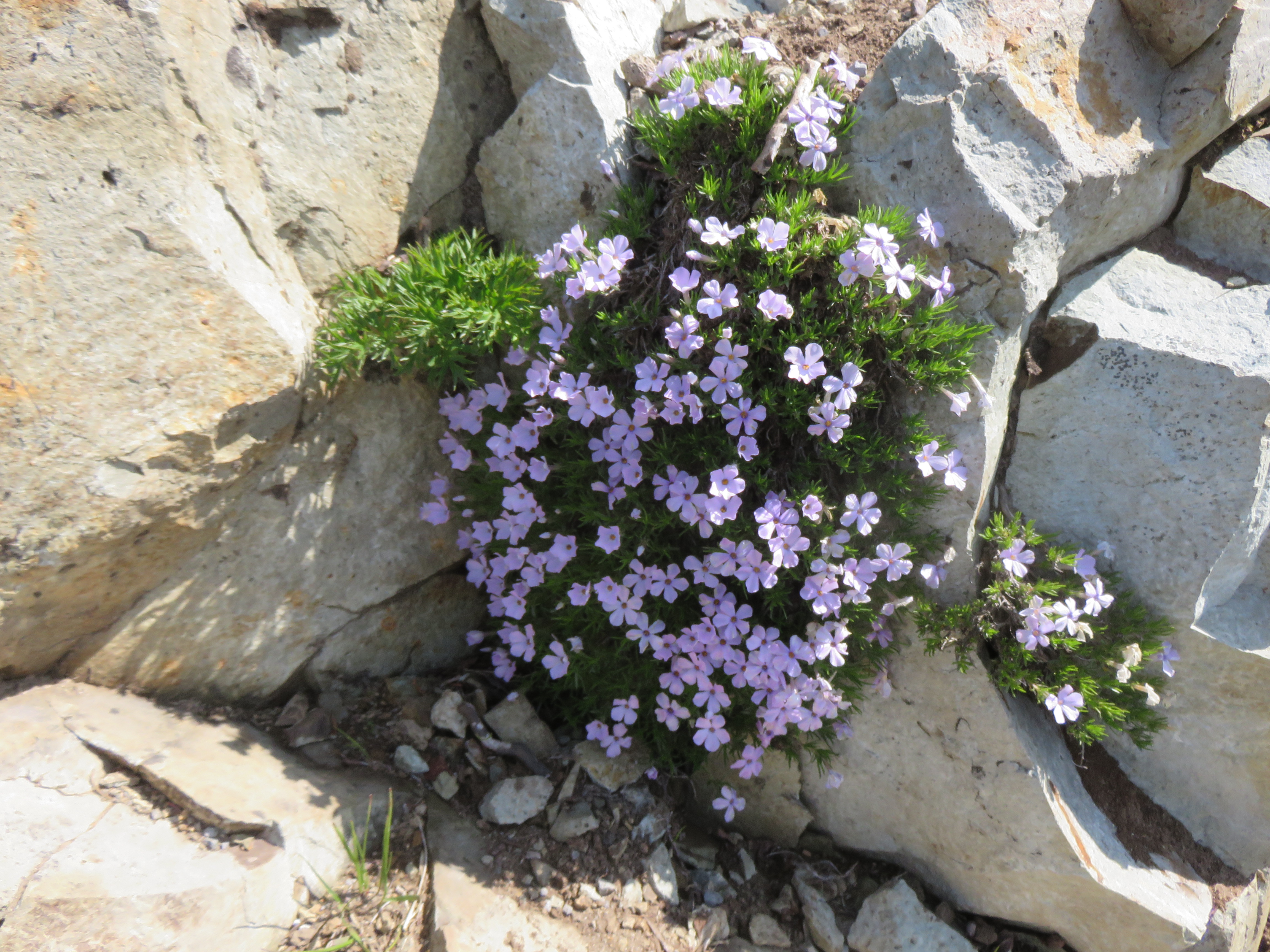
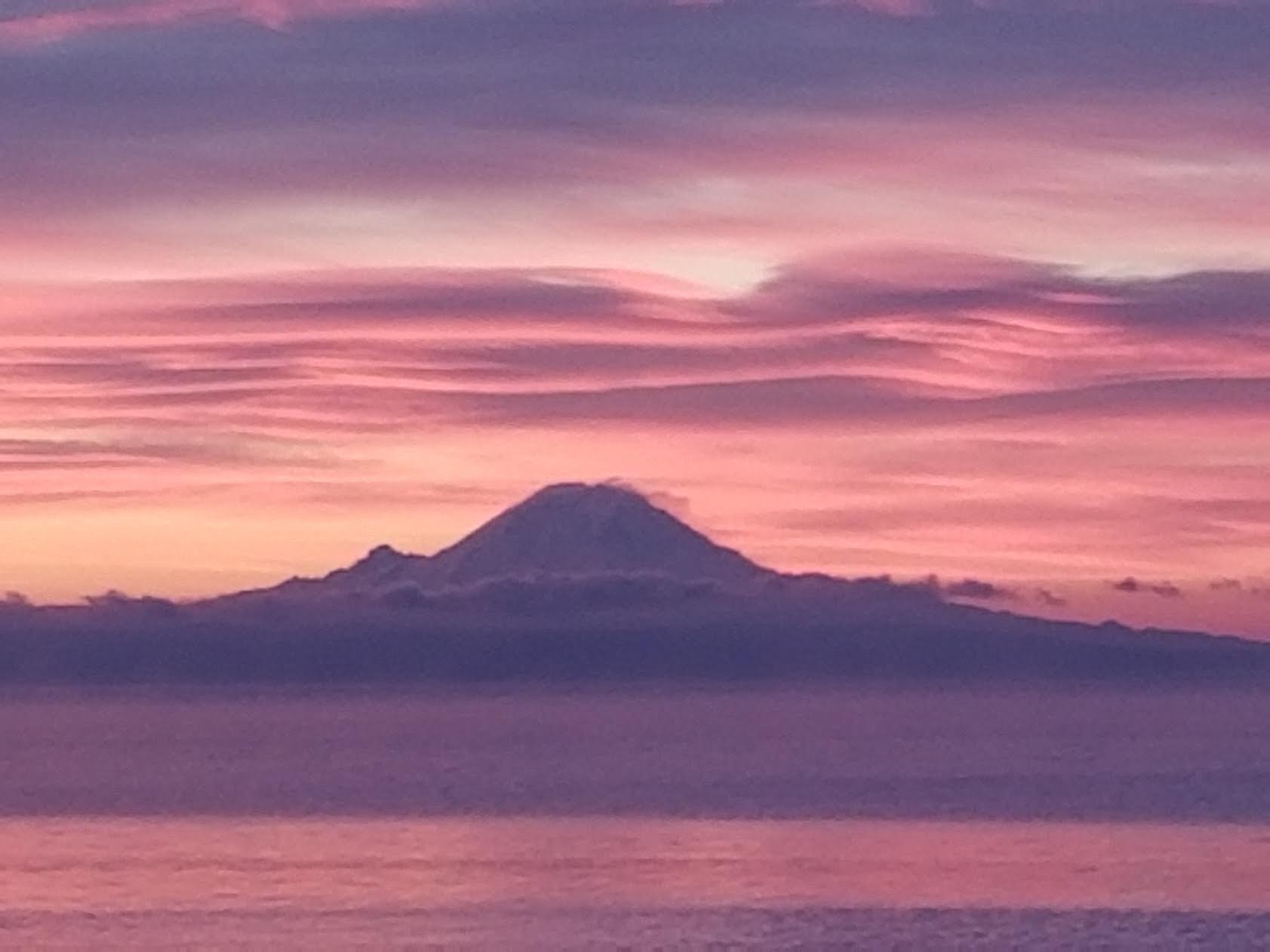
Mount Rainier at sunrise
Can we get high on alpenglow and aspen groves? Yes—and, doctor’s orders, we should, for our own happiness, let transcendent experiences enrich our lives. When psychologist Dacher Keltner studied high school students’ experiences of awe on a white-water rafting trip, he observed biophilia, love of the natural world, in action. The teens made deep connections to their environment. One student commented, “What’s cool about awe is that it literally blows your mind!”
Keltner noted, “In various studies we’ve asked people, ‘What’s running through your mind when you feel awe?’ And they’ll say things like ‘I want to make the world better,’ or ‘I just feel like being quiet,’ or ‘I feel like purifying things.’ It makes you humble. It makes you curious about the world.” Awe, attention, and appreciation are good medicine for what ails us.
The humbling emotion of awe is most often elicited by raw nature, elevating our well-being, and sometimes even revising our assessments of the world. It is an energized pleasure that seems almost on the brink of fear, touched by infinity or at least something beyond us. For instance, Scott Russell Sanders wrote in A Brief History of Awe, witnessing thunderstorms provokes the feelings of awe and wonder in him.
One of my most awe-filled moments was on a twenty-mile hike on New Zealand’s Hollyford Track. The fern-choked trail led us past waterfalls, rivers, and mossy rocks as rain pattered on our yellow slickers. The deluge let up as we walked further into the beech forests of Hollyford Valley, and we felt a world away from ordinary life. But it was when we approached a rocky shore that my husband and I stopped dead in our tracks. There were Fiordland crested penguins (known as tawaki in Maori) on the beach, sporting their extravagant, yellow eyebrow feathers as they hopped from rock to rock! It was a moment I will never forget because I knew how lucky we were to see such rare birds.
My husband and I observed the penguins from afar and then continued on our way, transformed by the brief encounter. It was as if I’d seen charming creatures from a fairy tale, they were so magical. As Jonah Paquette wrote in Awestruck: How Embracing Wonder Can Make You Happier, Healthier, and More Connected, our vision expands in such moments. “By learning to see ourselves through this lens,” he wrote, “we allow ourselves to feel a sense of greater cosmic purpose, to see ourselves as a link in the chain of history, and perhaps experience a sense of awe.”
When I turn my attention to small miracles of smooth stones on the beach, pine fragrance of trees, or pink clouds at sunrise, I have gratitude. I believe in greater possibilities—and in the value of my own life. Whether or not I reach the worshipful level of awe, I take time to savor. And in savoring, I believe, lies the salvation of the world, because we take care of what we love. It’s part of what makes life worth living.

AS GREAT BRITAIN MOURNS THE PASSING OF A QUEEN
https://www.storied-stuff.com/stories/barbara-terao-2

Trying on outfits helps us know who we are—and who we are not. My mother bought me this satin, sequined crown and cape at a church bazaar in my hometown of Northfield, Minnesota. The hand-sewn costume was lovely and fit my five-year-old frame, but not my personality. As my father took my photo, I sat up straight, as regally as I could. But our Brittany Spaniel, Princess, had had puppies and I was more interested in playing with a wiggly pup than posing.
A couple years later, my mom signed me up for ballet class at Northfield Arts Guild. After three lessons, I convinced her to let me stay home and watch “The Lone Ranger” on TV instead. Rather than twirling on my toes, I wanted to ride Silver, the horse I saw on television.
Some of my friends dressed up their dolls and I joined them for the fun of their company, but preferred playing frisbee tag in our cul-de-sac or exploring the college arboretum with my friend, Amy. Rather than aspiring to a throne, I liked sitting in trees. Perhaps that’s the influence of my Celtic roots.
Thanks to a glass slipper, Cinderella attained royal status by catching the eye of a prince. The size and appearance of her hair, figure, and even her feet were the means of her success. What message does that send? Writer Sarah Showfety calls “beauty-based praise-baiting” a toxic message for girls, as if their looks are the basis of their self-worth. I’d rather melt down that glass shoe and make of it a new lens to see more facets of ourselves.
I was never glamorous princess material. Though my nickname was Barbie, I lacked the fashion sense of the Mattel doll (and never owned one as a child). Rather than a tiara or tutu, I preferred a T-shirt and jeans. Yet we all have moments of glory when we deserve a sparkly crown in our lives. I think, in such moments, I’ll hold mine inside and let it shine from there.

Minnesota is known as the land of 10,000 lakes. In truth, the state has more than 14,000 lakes of ten acres or more. I enjoyed many of them as I was growing up.
At the Port Townsend Writers’ Conference last month, I attended a workshop on poetry of witness, a way of writing that holds up hard truths so they are not forgotten. Dawn Pichon Barron of Evergreen State College led the workshop and asked us to write about a troubling societal issue. She gave us 16 minutes to compose a poem of witness. As we read our resulting poems, we experienced not only witnessing but also a “with-ness” (Mitsein) with each other.
Here is mine, inspired by my love of lakes and the need to protect them.
10,000 Lakes Minus One
You may remember
the Minnesota lake
where you stepped in clear
cool water on a hot day.
You may remember glittering minnows
skittering away in the shallows,
bass and pike as you went deeper.
You may remember the faint hint of algae
as you swam out among the fish.
Now when you visit you wonder—
What has happened to this place?
And WHAT is that smell?
When you wade in for a swim,
you’re blocked by invasive seaweed,
a thick mat of Eurasian milfoil grabbing your legs.
The smell is of a suffocating, overgrown lake
that is dying.
Yet, if you stand on the high bank
and look east
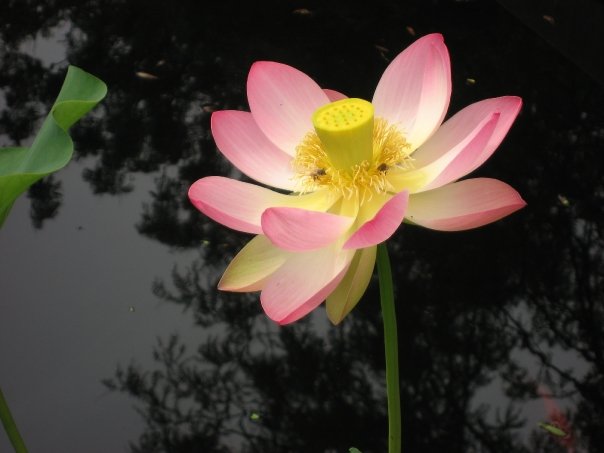
you’ll see a single pink water lily
and its wide green pad floating,
shining in the light.
Seaweed problems are not only in lakes. ABC News reported “Record amount of seaweed is choking shores in the Caribbean.” More than 24 million tons of sargassum clogged the Atlantic in June.
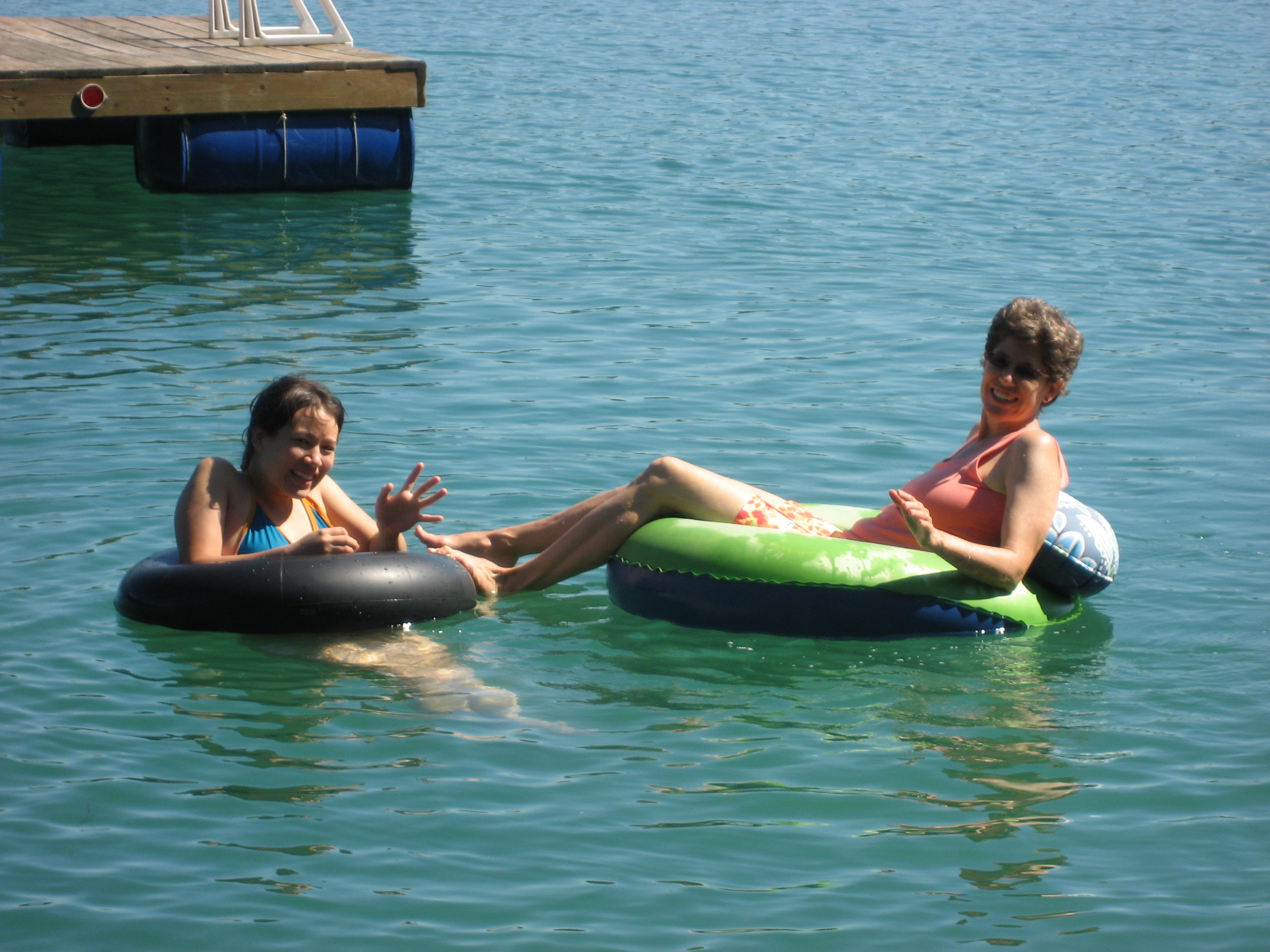
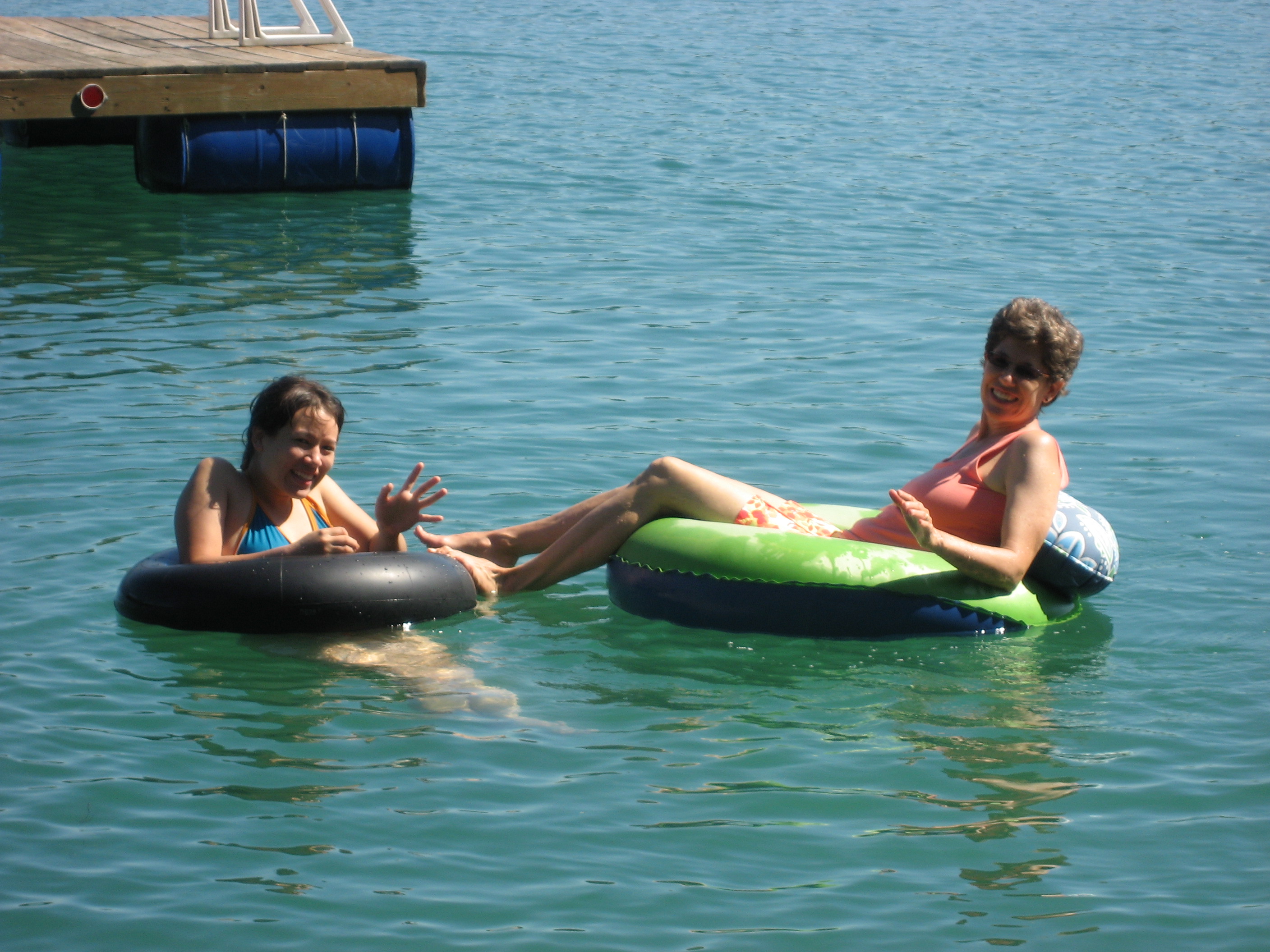
Growing up in Minnesota, summer meant jumping in Bay Lake to play to my heart’s content. One day, my dad came home from the marina with a huge inner tube in our yellow speedboat. Probably made for a colossal tractor tire, I could stretch out on that inflated, rubbery ring and float for ages. Or I would bounce on it with a friend until one – or both of us – tumbled, laughing, into the water.
My other favorite activity was jumping with my friends on the trampoline on the beach of a nearby resort. Luckily, the resort owners knew my family and tolerated our frequent visits.
When I think back on those times, I wonder if I had an excess of nervous energy or was simply an active kid. I sure liked being in motion, particularly if there was a bounce involved. Maybe all that ricocheting around kept me in shape. I didn’t think of myself as athletic, but in fourth grade I was one of a handful of children at my school to be given the Presidential Fitness Award, a program promoted by President Kennedy. I sewed the patch they gave me on my jacket, not sure what to make of it.
No longer taking my health or energy for granted, I now appreciate that brief, unexpected recognition of what our bodies can do for us. And I still like to float on water, preferably with a cushy inner tube on which I can lean back and watch the sky.
Barbara Wolf Terao is from Northfield, Minnesota and now lives on an island in the Pacific Northwest. She’s written a memoir called Reconfigured and posts random observations on her Of the Earth blog. This piece was posted on Storied-Stuff.com on May 4, 2022.
 OF THE EARTH by Barbara Terao