Mabel Dodge Luhan House

Mable Dodge Luhan House

Among the magnetic forces attracting creative geniuses to Taos, New Mexico, besides the land itself, were author and heiress Mabel Dodge Luhan and her Native American husband Tony Luhan.  Mabel invited innovative artists and writers to Taos and, once they were there, many of them, such as Georgia O’Keeffe and D.H. Lawrence were smitten and came back often or moved there altogether.

Some arrived, as I did, in the midst of life changes.  One author observed that “many who came to the Luhan House were at a critical point in their lives, physically, psychologically, or vocationally.  For them the house functioned as a kind of life crisis center breaking down and healing (Lois Rudnick, Utopian Vistas).”  Three weeks after my surgery, my husband drove me down a narrow road to the creative vortex known as the Luhan House peeking out from the trees, a place to hear Mabel and Georgia and any muses who may yet linger.

The ninety-year-old home was handmade by people from Tony’s pueblo and is now an inn and historic site.  I entered the white double Dutch front door, passed through a small living room and up some steps into the Rainbow Room.  This is where the magic came alive.  The cozy, shabby chairs looked to me as if Mabel and Tony had only left the room for a moment and would be back bearing treats from the kitchen.  We would surely have fascinating conversations by the kiva fireplace (also handmade by the craftsmen of Taos Pueblo, with bits of hay showing through the clay).  We would foster a creative culture right here in northern New Mexico!

After I soaked up the atmosphere of the House, I went outside to a labyrinth made of stones.  Carrying a pretty green stone and a sparkling white one, I made my way to the center, winding back and forth on the artfully laid path.  Because my husband was waiting in the car, I walked as briskly as I could with my incisions still tender.  Mabel Dodge Luhan wrote in her book, Edge of Taos Desert, “Now I had come to the place where one life ends and another may begin.”  I left my stones in the center of the labyrinth along with prayers for my new journey, breaking down and healing.
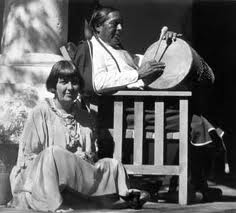
Mabel and Tony Luhan

Sipapu

Emerging from a kiva

The world has a navel, or sipapu, through which the people emerged.  Some say the Hopi emerged from the Grand Canyon’s sipapu, a calcified mound formed by a natural spring.  The Hopi and Pueblo people who use kivas as ceremonial chambers always include a golf-size hole in the floor of the kiva to serve as a sipapu, an umbilical cord to Mother Earth, so to speak.  You can see these sipapus in direct line with the fire pit in the remains at Mesa Verde and in recreated kivas elsewhere.   I would never be permitted in a working kiva as I am neither male nor Native American, so I have only been in restored kivas at Pecos National Historical Park in New Mexico.  I climbed down a ladder into the cool, round chamber and sat by the indentation of the sipapu.  I heard that offerings were sometimes made there so I left a leaf of sage and a wildflower.

Two weeks ago I was cut across the navel, what the doctor called an infraumbilical skin incision, to remove some of my insides.  What am I to make of this enlargement of my sipapu?  I came out of anesthesia feeling like I had expanded, and I don’t think it was just the gas they used to inflate my stomach.  I let go of cysts that were strangling my organs and my mind felt freed at the same time.  For a few days, I couldn’t plan ahead; I was only in the now, recovering in my Chicago bedroom.

Thirteen days later I am at the Taos Pueblo Corn Dance in New Mexico.  People live at this pueblo and have for centuries.  They rely on corn to live and offer drumming and dancing in gratitude and to maintain balance.  That’s what I want, too, to have gratitude for my survival and to have balance as I heal.  I sit near the river that runs through the village and wait for the Corn Dance to begin.  It is hot and hasn’t rained in weeks.  Dusty dogs come by and nudge our water bottles, then go off to play.

Some clouds drift by, one of them very dark; then suddenly it is raining over those of us waiting by Rio Pueblo de Taos.  I put my arm out to feel the drops.  They hit hard.  We spectators bow our heads to the rain.  Our feet are speckled by the brown-red dirt thrown up by the force of the drops hitting the ground, the same soil that was used to make the complex of adobe homes in front of us.  This feels like a blessing to me, both the sacred earth and the reprieve from the hot, dry June we’ve been having.

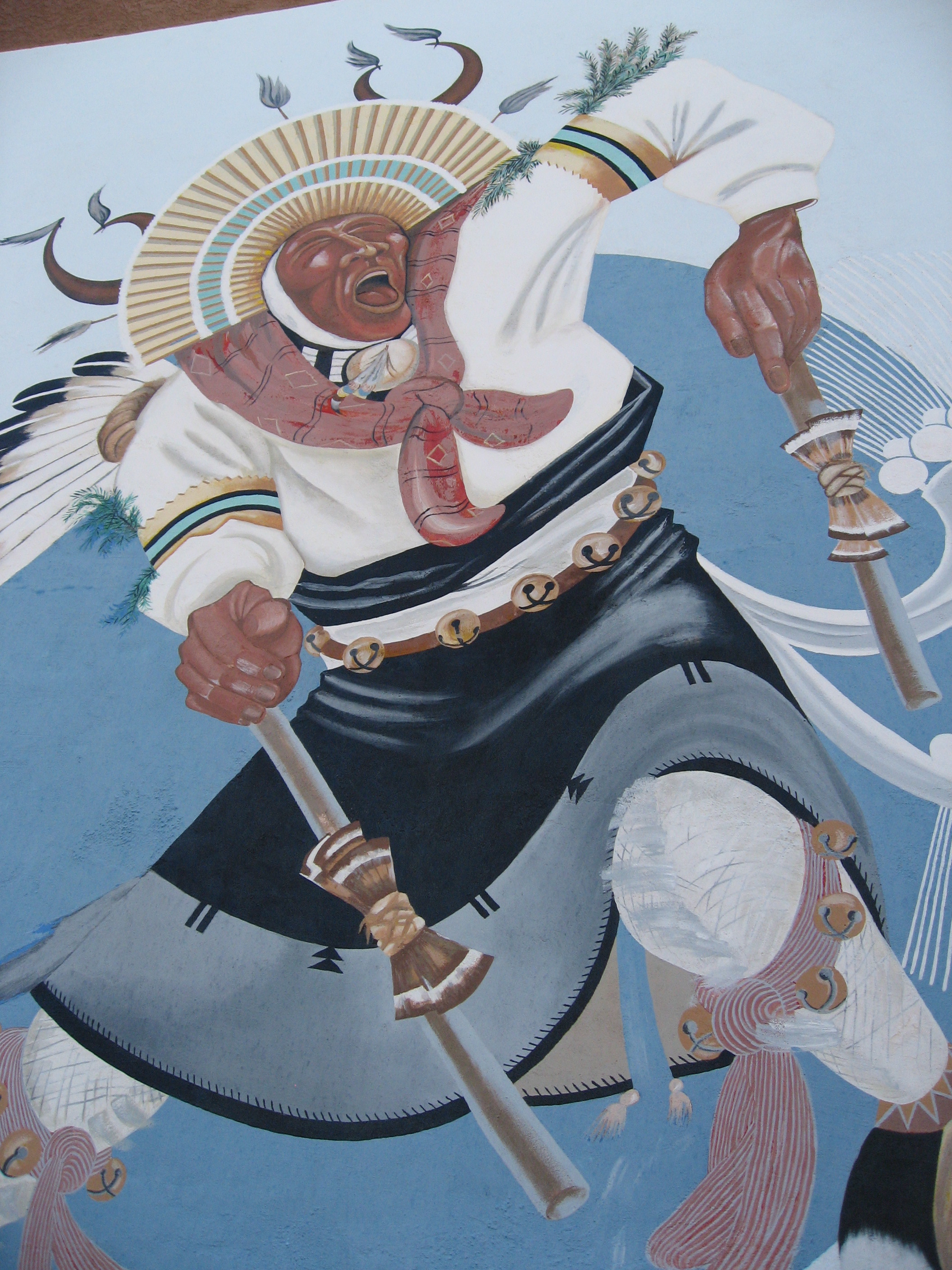
After a few minutes, the rain stops and men emerge carrying drums, and two young men have eagle feathers in their hair.  They are joined by women carrying bundles of flowers in each hand.  The dance begins and I call the ancient prayers into my sipapu, wondering what corn I will be growing in my new life.

Mural of Pueblo dancer

Texas: Big Hats, Big Hearts


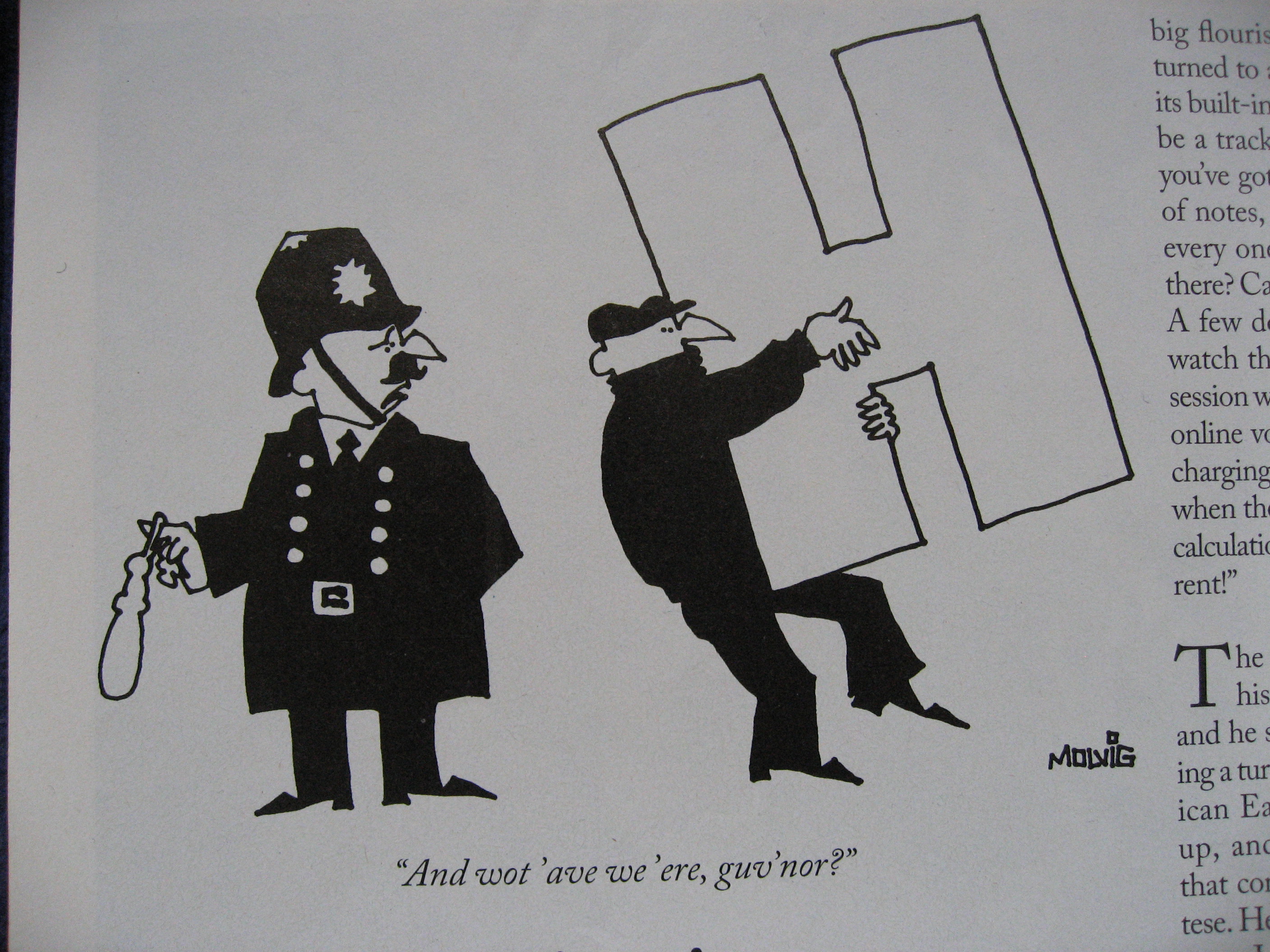
Remember the H

Remember the H


“Don’t forget the ‘h’ in wh,’” my daughter Stephanie’s English teacher told her.  He was from Texas.

It wasn’t until Stephanie and I traveled to Dallas and Fort Worth in May that we understood his position on this.  Being from the Midwest, we pronounce our “wh’s” pretty much like our “w’s”, with but a wisp of air escaping our lips.

My cousin Buzz could snuff a candle with his pronunciation.  Forget that he was born in St. Louis; he’s Texan now and puffs out his “when” and “while” and even his “well,” h-less though it is.  “Whhe-ell,” he said, as if the word had two syllables, “Whhen are y’all coming to Dallas?  Can you stay for a whhhile?”

Once Steph pointed this out, I started noticing it all over Texas from the BBQ waitress in Glen Rose to the custom boot-maker, Dean, in Granbury who sold us some used roper boots.  Dean, now gray-haired, was once the stuntman for McCloud on TV and had the photos on the wall to prove it.  He also claimed to make boots for both George Bushes and to mightily dislike the current man in the White House.  Dean is fixin’ to get the Constitution reinstated and put things to rights in this country.  Something about that drawl made disagreeing with him less disagreeable and more of a friendly discussion.

“Those boots get worn down, you just mail ‘em back to me and I’ll fix ‘em right up for y’all,” Dean said as we departed.  Texans can’t let you out the door without some unexpected generosity, filling up a to-go cup of sweet tea for the road or handing out a sample of their prized Dr. Pepper-marinated beef jerky.  The land itself offered up fossils as we sat on the rim of an ancient lake bed.  Buzz filled my hand with bluebonnet seeds he’d harvested on the spot and my other cousin, Whitney, sent us off to the airport with a pile of muffins and scones.  Most of the Texans we met were so warm and engaging, once you got talking with them, it was hard to leave.

Too soon we were flying back to short-winded Chicago.  If I could, I’d have set a while among the Lone Star wildflowers and drawled old poetry with lots of “whhithers” and “whherefores,” or some breathy lines from Edna St Vincent Millay:

What lips my lips have kissed, and where, and why,

I have forgotten, …

I only know that summer sang in me

A little while, that in me sings no more.

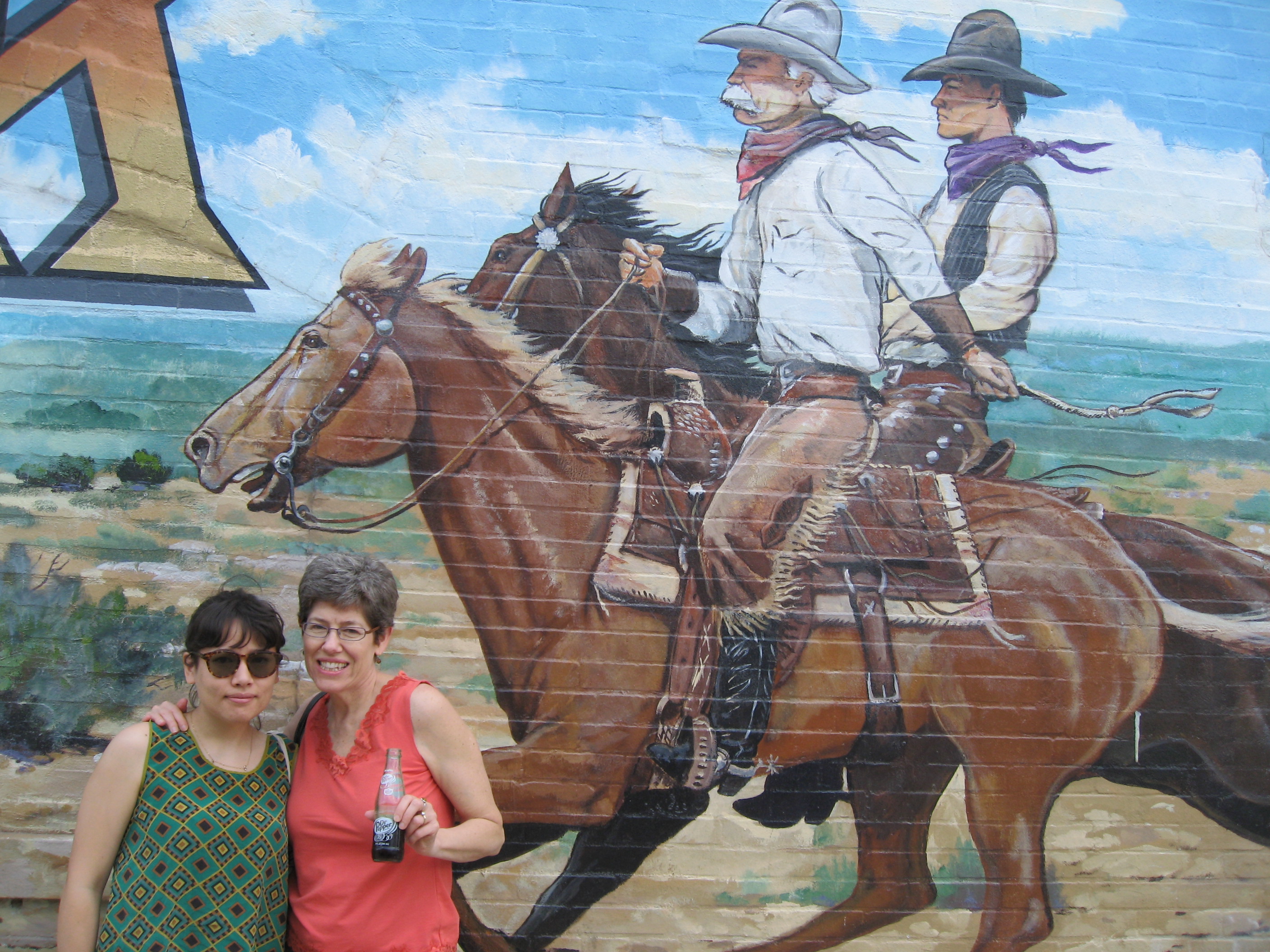
Soaking in some sun and locally brewed Dr. Pepper

For Earth Mother


It’s almost Mother’s Day.  Besides remembering my own mother, I am thinking of Mother Earth.  I owe them both my life.  To the Incans of South America, Pachamama is goddess of the Cosmos.  A toast is made to her, “the good mother,” at all manner of festivities.

For chemist James Lovelock and microbiologist Lynn Margulis, Mother Earth is considered to be a complex, self-regulating system known as Gaia, from the Greek’s poetic term for our planet.  The Gaia Hypothesis proposed in 1979 provided new reasons to cherish and respect the Earth and her processes and not mess with them!  Good advice.

What advice would Gaia give us human types walking around among her beautiful hills and valleys?  I think it would be pretty much like this prayer from my Wampanoag mentor, Manitonquat (or Medicine Story) who is still going strong at 82 (see http://www.circleway.org).

Rainbow over Bay Lake, MN


MANITONQUAT’S PRAYER

Hear, oh Humankind, the prayer of my heart..

For are we not one, have we not one desire,
to heal our Mother Earth and bind her wounds
and still to be free as the spotted Eagle climbing
the laughing breath of our Father Sky,
to hear again from dark forests and flashing rivers
the varied ever-changing Song of Creation?

Oh Humankind, are we not all brothers and sisters,
are we not the grandchildren of the Great Mystery?
Do we not all want to love and be loved,
to work and to play, to sing and dance together?

But we live with fear.
Fear that is hate, fear that is mistrust, envy, greed, vanity,
fear that is ambition, competition, aggression,
fear that is loneliness, anger, bitterness, cruelty….
and yet, fear is only twisted love, love turned back on itself,
love that was denied, love that was rejected…

And love….
Love is life ~ creation, seed and leaf
and blossom and fruit and seed;
love is growth and search and reach and touch and dance.
Love is nurture and succor and feed and pleasure.
Love is pleasuring ourselves, pleasuring each other.
Love is life believing in itself.

And life….
Life is the Sacred Mystery singing to itself,
dancing to its drum, telling stories, improvising, playing.

And we are all that Spirit,
our stories tell but one cosmic story that we are love indeed,
that perfect love in me seeks the love in you
and if our eyes could ever meet without fear
we would recognize each other and rejoice,
for love is life believing in itself.

A toast to all the mothers out there!

Animal Friends

Our shepherd gets acquainted with a ball python.

Making friends across species lines is part of what makes life on earth so fascinating.  The majority of households in the United States have pets in them, and many people consider animal companions to be friends or even family.  It turns out that we’re not the only ones to do this.  Jennifer Holland, a writer for National Geographic (and occasional visitor to my yoga class when she’s in town visiting family), gives 47 examples of finned, furred, and feathered friends mixing it up in her book, Unlikely Friendships.  You can also see videos of social critters on National Geographic’s Unlikely Animal Friends.

Having a friend, whether for a short time or a long time, can make all the difference in the world.  Sometimes our friends are a lot like us and sometimes they’re very different from us.  You never know who will reach out to you, bring you some warmth, and make your day.  Some of the stories in this book are about brief encounters, such as a manta ray who insisted on being pet like a cat by a diver off the coast of Florida.  Some are lifelong bonds.

Holland acknowledges the view of some people that “anthropomorphic anecdotes have no place in science,” and she is careful not to impose her own interpretations of what the animals are feeling and experiencing.  But clearly the animals she describes are acting on more than instinct.  She quotes from her interview with Jane Goodall, “You cannot share your life in any meaningful way with an animal and not realize they have different personalities.  Are their capabilities and emotions similar to ours?  Absolutely.”

Many stories feature that miracle of adaptation, the dog.  When a family in Ohio took in a nearly blind deer named Dillie, it was the family poodle that licked her, slept with her, and brought her toys.  Dillie is afraid of any other dog, but loves to be with Lady the poodle.  A dachshund welcomed a piglet to her litter of puppies when he was unable to compete with the other, bigger piglets for his mother’s milk.  The pig survived and now acts more canine than porcine.

Other pairs in the book are such unexpected combinations as a snake and a hamster, a rat and a cat, monkeys and capybaras, and a leopard and a cow.  Holland’s retelling of the famous case of Koko the gorilla and her tiny kitten, Ball, is as moving as ever.  We not only learn about animals from these stories, we learn from them as well, perhaps to overlook that bit of DNA that separates us, one species from another, and simply see a being with a capacity different from our own but no lesser.

After facing racially charged abuse, Rodney King asked, “Why can’t we all just get along?”  Part of the appeal of these stories is the hope they provide that, no matter our differences, we can.

UNLIKELY FRIENDSHIPS: 47 Remarkable Stories from the Animal Kingdom by Jennifer S. Holland, Workman Publishing, 2011.

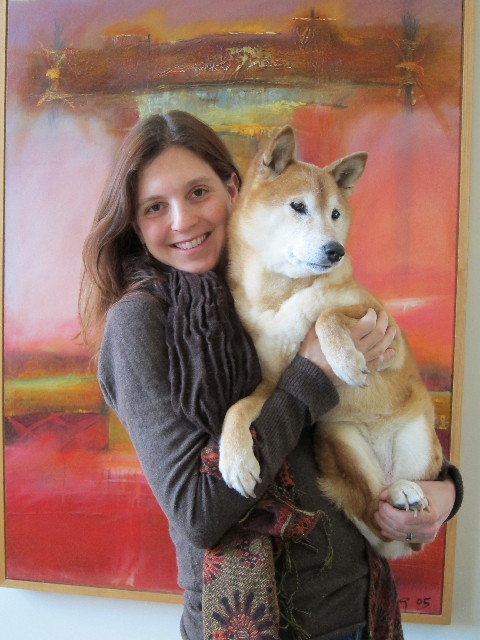
Jennifer Holland and shiba inu, Tai
(Photo courtesy of John Holland)

Planet Walker

"A great companion on your walk..." (p. 148)

Two things about John Francis are stunning to consider: He chose to not speak for 17 years and chose to walk everywhere for 22 years.  His parents worried for his sanity, but eventually saw that he was living by his values.  His wandering reminds me of Johnny Appleseed planting all those trees, and his silence reminds me of Anne LeClaire who chooses to be silent two days a month.

A TED talk brought him to my attention and I found his book Planetwalker (2008, Washington, D.C.: National Geographic) in Evanston Public Library.  When John Francis was a young man in 1971, he witnessed an oil spill from two tankers that collided under the Golden Gate Bridge.He decided that he didn’t want to depend on things that depended on oil, so he gave up riding in motorized vehicles.  He walked everywhere, often playing his banjo as he went.  To complete his college education, he walked from California to Southern Oregon State College, then onto Missoula, Montana for a graduate degree, then to Madison, Wisconsin for his Ph.D. in land resources.  Eventually, he crossed the entire country on foot.

His parents stopped wondering about his mental health and started following his accomplishments with pride.  John could only converse with them by notes and hand signs because he gave up talking.  He got all those degrees without saying a word!  He gave up talking for a day so he could listen better.  The day turned into a year and the year lasted until April 22, 1990.  “I have chosen Earth Day to begin speaking,” he said, “so that I will remember that now I will be speaking for the environment.” (p. 250)

Dr. Francis said (p. 274), “I think I’d like to refer to myself as an environmental practitioner instead of an environmentalist.  … [P]ractitioner implies becoming and doing something in order to improve.  In the end, I think it’s about learning to live better on Earth.”  In 1991, he was hired by the U.S. government to help draft oil spill regulations.  He also founded an environmental organization, Planetwalker, and developed a curriculum he calls Planetlines.

One of the things he wants to share is that “walking and silence save me.  They not only give me the opportunity to slow down to listen and to watch others; they afford the same opportunity with myself.” (p. 50)  John’s pilgrimage was an individual journey, but its effects rippled far and wide.  I learn from him to walk the planet in new ways.

Reliable Friends

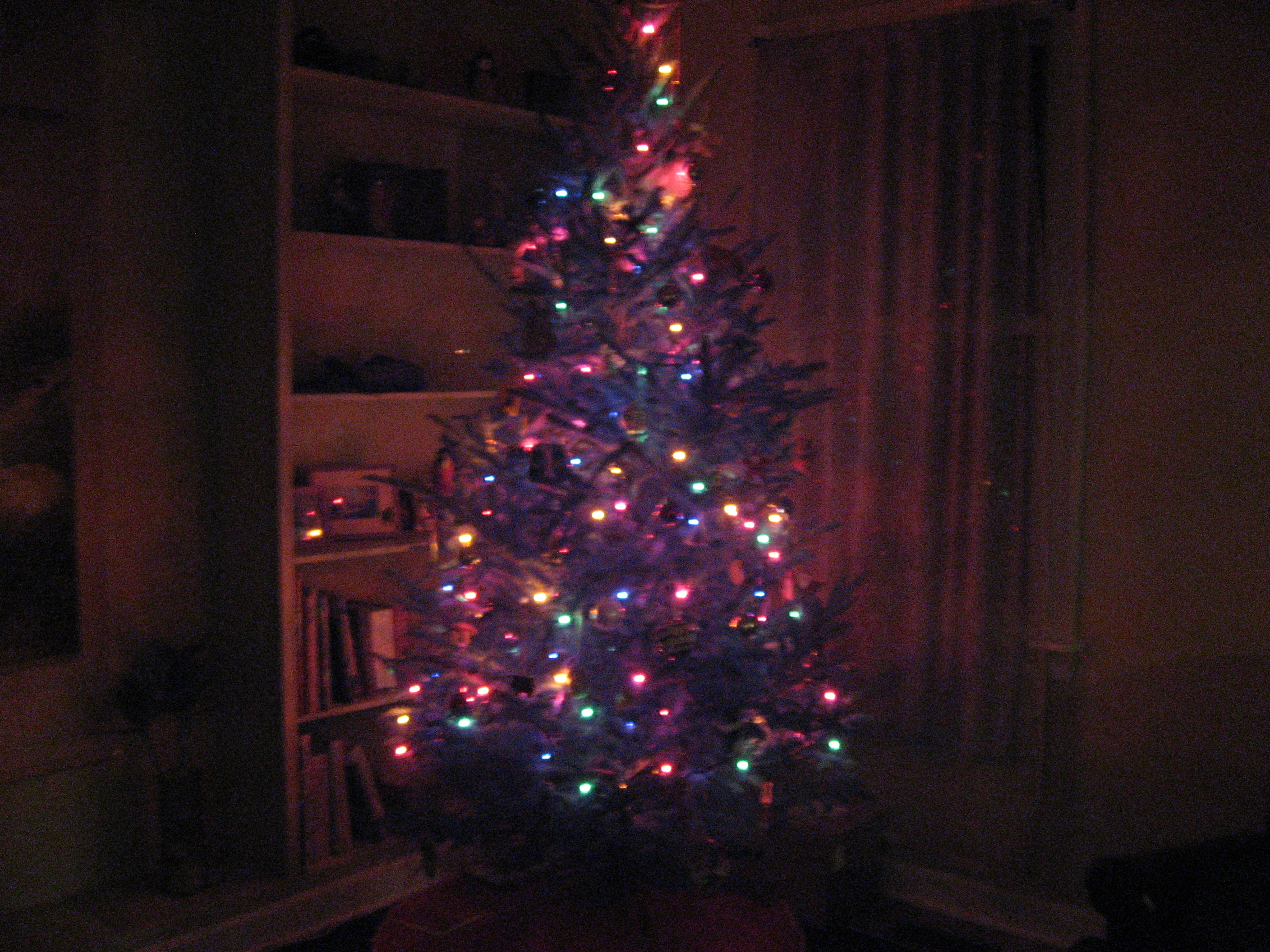
O, Tannenbaum, how lovely are your branches.

You need no introduction to nature.

You are nature.

To nature you return.

Nature holds you every day.

Yet who among us does not need

a reminder of these things?

That is the point of this Of the Earth blog, to remind myself to go outside, to be in nature, to remember what it’s all about.

On this Solstice, I am remembering.  I am watching for babies’ smiles.  I am listening for the voices of my friends and family.  Now I pause to listen, too, to the more quiet ones with the cold, damp bark and the skitter of feathers.  With them, I am “one of the common things,” as poet William Stafford (Allegiances, 1970) said, joining in rejoicing for the lengthening days.

“World, I am your slow guest,

one of the common things

that move in the sun and have

close, reliable friends

in the earth, in the air, in the rock.”

Even in winter, the Hudson River naturalist John Burroughs (John Burroughs America, 1951) made a point of conversing with the plants where he lived.  “Nearly every season I make the acquaintance of one or more new flowers.  It takes years to exhaust the botanical treasures of any one considerable neighborhood,” he wrote.

Like John Muir and Aldo Leopold, Burroughs had a special fondness for conifers and he wrote, “How friendly the pine tree is to man—so docile and available as timber and so warm and protective as shelter!  Its balsam is salve to his wounds, its fragrance is long life to his nostrils; an abiding, perennial tree, tempering the climate, cool as murmuring waters in summer and like a wrapping of fur in winter.”  In thinning the white pines near our cabin, I brought three inside and now I see my friends all around.  As my favorite carol says, how lovely are their branches.

old friend

The Middle of Somewhere

When people find out that my husband and I plan to move to the middle of rural Wisconsin, we get a lot of questions.  Right now we live in Evanston, population 74,486, which is right next to Chicago with a population over two million.

Where are we going?  To Wautoma, population 2100.  That is a big change.  And we won’t be living in town, such as it is, but in the woods by a lake.  That description of our location may be sufficient explanation of our move for some people.  But many of our friends and family want to know how we will adjust to the lack of cultural institutions, ethnic diversity, restaurants, health food stores, and other amenities.  Some worry about us enduring long, cold winters.

I have the same questions and they led me to read books about people who survived such a move.  One memoir I’ve read so far is We Took to the Woods by Louise Rich, first published in 1942 but still quite useful.  I will summarize a couple points of reassurance from her book here.

Louise was raised in a Massachusetts town and then moved to the deep woods of Maine when she married her husband, Ralph.  They were 20 miles from the nearest store, which is a long way, especially in the winter when they pulled their groceries home on a sled.  When hunters and fishermen visited their river and woods, they tended to ask the same questions, so Louise started each chapter with a typical question that she heard from visitors.

The chapter titled “Don’t You Get Awfully Out of Touch?” takes pains to explain “that we aren’t out of touch with anybody that we want to stay in touch with.  After all, the U.S. Mail still operates.”  She doesn’t mention in this chapter that if they want their mail in the winter, they have to snowshoe quite a ways to get it!  We actually have roads going by our Wisconsin home, passable–most days–even in the winter, and mail delivery to the end of our driveway.  Plus, we’ll even have internet up there to help us stay in touch.

I sat up and took notice when Louise addressed the seasons.  “What people really mean when they ask us if we live here the year ’round is ‘But good Lord!  Certainly you don’t stay in here during the winter?  You must be crazy!'”  Louise admitted, “I would have thought so myself before I tried it.”  I take great comfort in the fact that she tried it and she liked it.  She found there was a lot to like in the snowy woods of Maine.

She herself thought winters would be miserable.  “It’s the time you expected to drag intolerably, and once in a while you stop and wonder when the drag is going to begin.  Next week, you warn yourself, after we’ve finished doing this job on hand, we’d better be prepared for a siege of boredom.  But somehow next week never comes.”  And pretty soon the ice broke up and the loons came back…

Louise Rich didn’t miss urban life and culture very often, because she had plenty to do in her own neck of the woods, what with writing, raising children, and endless chores like cooking on the wood stove.  As she put it, “All we have are sun and wind and rain, and space in which to move and breathe.  All we have are the forests, and the calm expanses of the lakes, and time to call our own.”

By some measures, our cabin is in the middle of nowhere.  But when I’m up there, there’s nowhere I’d rather be.  But check with me come February.

It all depends where you want to be.


Of the Earth, By the Earth, and For the Earth

Dr. Seung Heun Lee offered “The Prayer for Peace” at the opening ceremony of the General Assembly of the United Nations on August 28, 2000.  Since he invoked the name of this blog, I share an excerpt here.  Eleven years later, having experienced in the U.S. the ravaging effects of the 9/11/01 attacks, his call for a revolution of the human spirit seems even more fitting.  Here are some of his words for healing our world.

with gratitude together we rise

“I offer this prayer for peace

To declare a revolution

Of the human spirit.

I wish to announce that

It is now time

For all of us to spiritually awaken

And become enlightened,

For the time of the enlightened few is over,

The age of elitist enlightenment has passed.

For how long do you seek to wait for prophets

To come down from mountaintops

And tell us what to do?

We all must become enlightened

To recognize our divinity,

To raise up our consciousness…

We must ourselves become the enlightened ones.

We must realize our Oneness.

I declare that we must all become ‘earthlings’

Of the Earth

And not of any religion, nation or race,

But of this Earth, for this Earth, and by this Earth

To create a lasting peace

On Earth.”

Bodhisattva of the Earth

Back to the Shack

Looking out from the Shack

The final section of A Sand County Almanac (1949) is called “The Outlook.”  In it Aldo Leopold considered various attitudes, from “the farmer for whom the land is still an adversary” to the urban dweller who “is separated from the land by many middlemen, and by innumerable physical gadgets.”  He worried in the 1940s that land had become, for some, merely “the space between cities on which crops grow,” though most people still lived in those rural spaces.  In our time, for the first time, more people in the world live in cities than in the country.

He also worried about the habit of viewing the land as a commodity.  For Leopold–outdoorsman, ecologist, professor of game management–it boiled down to valuing our natural environment for so much more than its economic value.  “It is inconceivable to me that an ethical relation to land can exist without love, respect, admiration,” he wrote.  He saw himself as part of a community, integrally connected to the plants, animals, water, air, and the soil itself.

It was about a year ago that I biked to the Shack where Leopold wrote about the land ethic and practiced its principles.  The building was not open at the time.  (See my September 18, 2010 post.)  I went back last week for two days of Land Ethic Leadership training, with plentiful role models of the love and respect of which Leopold spoke.  We learned in large groups, small groups, and out on the land.  We hiked in silence to a prairie remnant at the top of a Baraboo bluff.  I lay on a slab of ancient red stone and watched the grass and sky.   We also removed invasive plant species around the Leopold Center buildings.  Mostly, we talked about how to talk about conservation and the health of the land.

A highlight for many of us was to go inside the famous Shack at the very end of our training.  It is hard to believe that Aldo, Estella, and their five children stayed inside the tiny, dim space that was once a chicken coop.  Well, they slept on the bunks there, but mostly, I suppose, they were outside–planting the trees and wildflowers I admired from the window of the Shack and generally enjoying their time together in nature.

Leopold knew that our attitudes toward nature are always shifting, as his certainly did.  The land ethic is not a static thing that he could capture in words, because it is evolving.  Being in the woods and prairies, feeling the presence of Aldo’s daughter, Nina Leopold Bradley who died just a few months ago at the age of 93, and warmed by the light of the people at the Center, I was changed. Somehow my outlook from the window of the Shack took me beyond the pines, beyond the Wisconsin River, and back up to the top of that bluff.  I could see for miles.

Gathering at the Shack